

A straighter smile can feel exciting until the treatment estimate appears. Suddenly, the big question is not just, “Do I need braces or clear aligners?” It becomes, “Will my insurance help pay for this?” For many families and adults in Canada, orthodontic insurance can feel confusing. One plan may cover braces for children. Another may cover clear aligners only if the treatment is medically needed. Some plans have a lifetime maximum. Others may not include orthodontics at all.
So, are braces, SureSmile, Invisalign, or other clear aligners covered by insurance in Canada?
The honest answer is: sometimes. Coverage depends on your insurance plan, your age, the type of treatment recommended, and whether the insurance company considers the treatment orthodontic, cosmetic, or medically necessary.
This guide explains orthodontic insurance in simple terms so you can ask better questions before starting treatment.
What Is Orthodontic Insurance?
Orthodontic insurance is the part of a dental insurance plan that helps pay for treatments that move teeth or correct bite alignment.

This may include traditional braces, ceramic braces, retainers, and sometimes clear aligners such as SureSmile or Invisalign.
The important thing to know is that orthodontic care is usually treated differently from routine dental care.
For example, your plan may cover cleanings, exams, fillings, or X-rays every year. But orthodontic coverage often comes with separate rules.
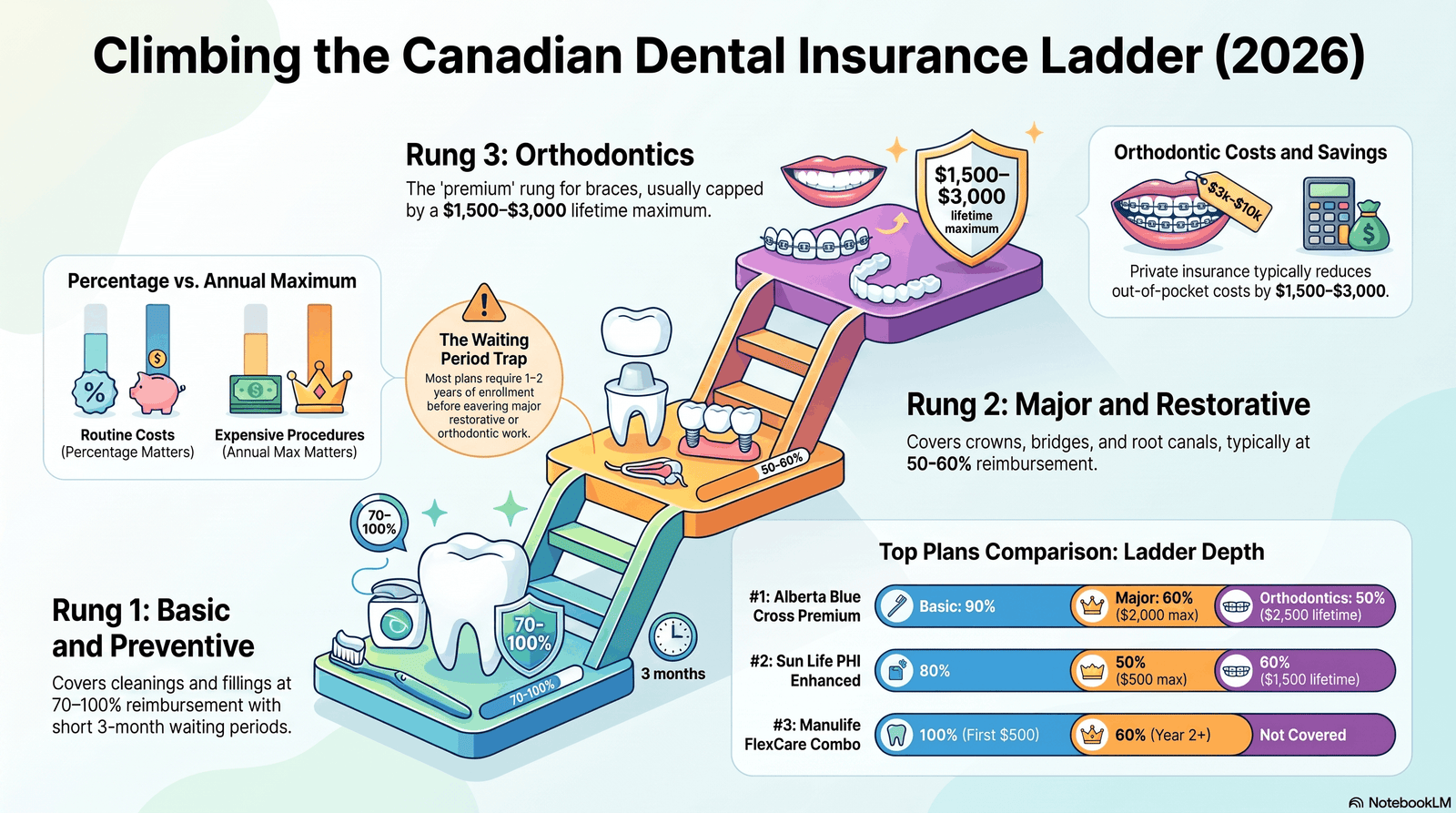
It may have a lifetime maximum instead of an annual maximum. That means the plan may only pay up to a set amount once in your life, not every year.
This is why patients are sometimes surprised. They may have dental insurance and assume orthodontic treatment is included, only to learn that it is limited or excluded.
Does Orthodontic Insurance Cover Braces in Canada?
Many private dental insurance plans in Canada may cover part of the cost of braces, but not all plans do.
When braces are covered, the plan may pay a percentage of the treatment cost, up to a fixed maximum.
For example, a plan may cover a portion of orthodontic treatment until it reaches its lifetime limit. After that, the remaining cost is usually paid by the patient or family.
Coverage may also depend on age. Some plans cover orthodontic treatment only for children or teens. Others may offer adult orthodontic coverage, but with stricter limits.
Before starting braces, ask your insurance provider:
- Does my plan include orthodontic insurance?
- Is coverage available for adults or only dependents?
- What percentage does the plan cover?
- What is the lifetime maximum?
- Is preauthorization required?
- Are retainers included?
- Are clear aligners covered the same way as braces?
These questions can help you avoid surprise costs later.
Read more on how White Tooth Dental offers personalized payment finances or plans.
Are SureSmile Clear Aligners Covered by Insurance?
SureSmile clear aligners may be covered if your insurance plan includes orthodontic benefits and recognizes clear aligners as an eligible treatment.
However, not every plan treats aligners the same way. Some policies clearly mention braces, but not clear aligners. Others may include wording like “orthodontic appliances,” which may give more room for coverage.
This is where plan language matters.
If your insurance policy says it covers only “fixed orthodontic appliances,” that may mean traditional braces are covered but removable clear aligners are not.
If the policy includes “clear aligners” or “removable orthodontic appliances,” there may be a stronger chance of coverage.
SureSmile and other clear aligner systems are often chosen by adults and teens who want a discreet option. They are removable, easier to clean around, and less visible than metal braces.
But insurance companies may still ask whether the treatment is needed to improve bite function or mainly to improve appearance.
That is why a consultation and treatment plan are important. Your dental team can help provide the information your insurer may need to review the claim.
Are Clear Aligners Considered Cosmetic?
Clear aligners can improve the look of your smile, but that does not automatically mean they are only cosmetic.
If aligners are used to correct crowding, spacing, bite issues, or tooth movement that affects oral health, they may be considered orthodontic treatment. If the goal is only a minor cosmetic change, some plans may deny coverage.
This difference matters because insurance usually focuses more on function than appearance.
For example, a patient who wants a small front-tooth adjustment for appearance may receive a different insurance response than someone who has crowding that makes cleaning difficult or a bite issue that affects chewing.
A dentist can examine your teeth, bite, gums, and oral health before recommending whether braces, SureSmile, or another option is suitable.
What About the Canadian Dental Care Plan?
The Canadian Dental Care Plan, often called CDCP, helps eligible Canadians with some dental care costs. However, orthodontic services are handled differently from routine dental services.
At the time of writing, CDCP orthodontic services are not yet broadly available. A specific range of orthodontic services is expected in the future, and preauthorization will be required when those services become available.
This means patients should not assume braces or clear aligners are automatically covered by CDCP.
If you are eligible for CDCP and considering orthodontic treatment, ask the dental clinic and check the current CDCP rules before making a decision. Coverage rules can change, so it is better to confirm before beginning treatment.
Why Insurance May Cover Braces but Not Clear Aligners
Some insurance plans were written before clear aligners became as popular as they are today. Because of that, the wording may focus on traditional braces.
Braces are fixed to the teeth and are widely recognized as orthodontic treatment. Clear aligners are removable and more discreet, so some insurers may view them differently unless the plan clearly includes them.
That does not mean clear aligners are never covered. It means you need to check the exact wording of your policy.
A good dental office can help you understand what documents may be needed, such as a treatment estimate, diagnosis, X-rays, photos, or preauthorization form.
How Orthodontic Insurance Connects to Overall Oral Health
Straight teeth are not only about appearance. Crowded teeth can be harder to brush and floss. Bite problems may place stress on certain teeth.
Gaps may trap food. Misalignment may also affect how teeth wear over time.
That is why orthodontic treatment can sometimes support long-term dental health.
Still, your dentist will usually want to make sure your mouth is healthy before orthodontic treatment begins. Cavities, gum disease, infection, or severe tooth pain should be treated first.
For example, if you need a root canal in Toronto because of an infected tooth, that problem may need attention before starting aligners or braces. Moving teeth while an active dental infection is present is not ideal. A healthy foundation matters.
The same goes for gum health. If gums are inflamed or bleeding, your dentist may recommend cleaning or periodontal care before orthodontic treatment.
Can Orthodontics Help with Mouth Breathing at Night?
Some people search for orthodontic care because they notice mouth breathing at night, snoring, dry mouth, crowded teeth, or jaw development concerns.
Orthodontics may play a role in some cases, especially when jaw size, bite alignment, or narrow arches are involved. However, mouth breathing can also be linked to nasal blockage, allergies, enlarged tonsils, sleep issues, or other medical concerns.
That means orthodontics is not a one-size-fits-all answer.
If you or your child has mouth breathing at night, it is wise to mention it during a dental visit.
Your dentist may check for signs such as dry mouth, gum irritation, tooth wear, crowding, or changes in bite. In some cases, they may suggest speaking with a physician, ENT specialist, or orthodontic provider.
What If You Want Straighter and Whiter Teeth?
Many patients want both straighter teeth and a brighter smile. Searches like white teeth in Toronto often come from people who are exploring whitening, cosmetic dentistry, aligners, or a full smile improvement plan.
But whitening and orthodontics are usually treated differently by insurance.
Orthodontic insurance may help with tooth movement if your plan includes that benefit. Teeth whitening is usually considered cosmetic, so it is often not covered by dental insurance.
If you want both, the order matters. Many patients straighten their teeth first, then consider whitening after treatment.
This can create a more even and natural-looking result because teeth are in better alignment before the shade is improved.
People Also Ask
Does insurance cover braces in Canada?
Some private dental insurance plans cover braces, but coverage depends on the plan. Orthodontic treatment may be covered only for children, may have a lifetime maximum, and may require preauthorization before treatment begins.
Are clear aligners covered by dental insurance?
Clear aligners may be covered if your plan includes orthodontic insurance and recognizes clear aligners as eligible orthodontic treatment. Some plans cover them like braces, while others may exclude removable aligners.
Is SureSmile covered by insurance?
SureSmile may be covered under orthodontic insurance if your plan includes clear aligners or removable orthodontic appliances. The best way to know is to request a treatment estimate and send it to your insurer before starting.
Does CDCP cover braces or Invisalign?
CDCP does not currently provide broad orthodontic coverage. Orthodontic services are expected to require preauthorization when they become available. Patients should check the latest CDCP rules before beginning treatment.
Is orthodontic treatment covered for adults?
Some plans cover adult orthodontics, but many plans limit orthodontic benefits to children or dependents. Adults should check age limits, lifetime maximums, waiting periods, and treatment exclusions.
FAQs About Orthodontic Insurance in Canada
1. What is the biggest mistake patients make with orthodontic insurance?
The biggest mistake is starting treatment before confirming coverage. Always check if your plan includes orthodontic insurance, whether preauthorization is needed, and what the lifetime maximum is.
2. Does insurance pay the full cost of braces?
Usually, no. Most plans that include orthodontic benefits pay only part of the cost. The patient is often responsible for the remaining balance.
3. Are retainers covered after braces or aligners?
Some plans include retainers as part of orthodontic treatment, while others bill them separately. Ask your insurer before treatment starts.
4. Can I use two insurance plans for orthodontics?
In some cases, yes. If a child or patient has coverage under two plans, coordination of benefits may help reduce out-of-pocket costs. The exact amount depends on both plans.
5. Will insurance cover orthodontics if I only want a better-looking smile?
Maybe not. If treatment is considered cosmetic only, coverage may be denied. If treatment improves bite, spacing, crowding, or oral function, there may be a stronger case for coverage.
6. Do I need a dentist before starting clear aligners?
Yes, it is smart to have a dental exam first. Cavities, gum disease, infections, or other oral health issues should be addressed before moving teeth.
Final Thoughts
Orthodontic insurance in Canada can help make braces, SureSmile, or clear aligners more affordable, but it is not automatic. Coverage depends on your plan, age, treatment type, diagnosis, and whether your insurer accepts the treatment as orthodontic care. Before saying yes to treatment, get clear answers. Ask about preauthorization. Check your lifetime maximum. Find out if clear aligners are included. Make sure your teeth and gums are healthy enough to begin.
If you are in Bloor West Village or nearby Toronto areas, White Tooth Dental Family Dentistry can help you understand your smile goals, check your oral health, and guide you through your next steps with confidence.
Book an appointment with White Tooth Dental today and take the first step toward a healthier, straighter smile.