


Tooth pain has a way of taking over your entire day. One minute, you are trying to eat, sleep, work, or talk normally. The next minute, a sharp, throbbing, or swollen tooth makes it impossible to focus on anything else. Some dental problems can be repaired with a filling, crown, or root canal. But sometimes, the damage is too severe, the infection has spread too far, or the tooth is too weak to support treatment. If you are searching for emergency tooth extraction Toronto, you are likely dealing with pain, swelling, a broken tooth, or a dental infection that cannot wait.
That is when an emergency tooth extraction may become the safest option. At White Tooth Dental in Toronto, patients can receive urgent dental care, a careful diagnosis, and honest guidance on whether a tooth can still be saved or needs to be removed.
If you have severe tooth pain, facial swelling, a broken tooth, or signs of infection, book an appointment with White Tooth Dental in Toronto as soon as possible.
What is an Emergency Tooth Extraction?
An emergency tooth extraction is the urgent removal of a tooth when keeping it in place may cause more pain, infection, or damage. Unlike a planned extraction, an emergency extraction is usually needed because the problem has become sudden, severe, or risky.
This may happen after a dental abscess, deep decay, trauma, a cracked tooth, failed root canal treatment, advanced gum disease, or a wisdom tooth infection.
The goal is not simply to remove a tooth. The goal is to stop pain, control infection, protect nearby teeth, and prevent the condition from becoming worse.
The Canadian Dental Association explains that dental pain is commonly caused by tooth infection, decay, injury, or tooth loss, and patients should call a dentist and explain their symptoms so they can be seen as soon as possible.
When Can a Tooth No Longer Be Saved?
Dentists always try to save natural teeth when possible. A natural tooth helps preserve chewing function, jawbone health, bite alignment, and smile appearance. But there are situations where saving the tooth is no longer realistic.

A tooth may not be saved if the decay has destroyed too much structure, the root is fractured, the tooth is loose from severe gum disease, or the infection has damaged the surrounding bone.
A tooth may also need extraction if it is broken below the gumline or cannot support a crown after treatment.
In some cases, a root canal may save an infected tooth. But if the tooth is badly cracked, structurally weak, or repeatedly infected, extraction may be the healthier long-term choice.
Common Reasons You May Need Emergency Tooth Extraction in Toronto
1. Severe Tooth Decay
A cavity can start small, but untreated decay can spread deep into the tooth. Once bacteria reach the inner pulp, pain can become intense. If too much tooth structure is destroyed, a filling or crown may not be enough.
When decay reaches the point where the tooth cannot be rebuilt, extraction may be needed.
2. Dental Abscess or Infection
A dental abscess is a pocket of infection that can form near the root of a tooth or in the gums. It may cause throbbing pain, swelling, bad taste, fever, or tenderness when biting.
A serious infection should never be ignored. Sometimes the tooth can be saved with root canal therapy. Other times, extraction is needed to remove the source of infection.
3. Broken or Cracked Tooth
A small chip may be repaired with bonding or a filling. A larger fracture may need a crown. But if the crack extends into the root or below the gumline, the tooth may not be stable enough to save.
This is especially common after accidents, sports injuries, biting hard foods, or untreated teeth grinding.
4. Advanced Gum Disease
Gum disease can damage the bone and tissue that hold teeth in place. When a tooth becomes very loose, painful, or infected, extraction may be needed.
Removing a hopeless tooth can also help protect nearby teeth from further infection and inflammation.
5. Impacted or Infected Wisdom Tooth
Wisdom teeth often cause problems when there is not enough room for them to come in properly. They may become trapped under the gum, partially erupt, or press against nearby teeth.

An impacted wisdom tooth may cause swelling, jaw pain, bad breath, difficulty opening the mouth, or pain near the back molars. In emergency cases, removal may be required.
6. Failed Previous Dental Treatment
A tooth with an old filling, crown, or previous root canal may still become infected or fractured later. If retreatment is not possible, extraction may be the most predictable solution.
People Also Ask: Emergency Tooth Extraction Questions
How do I know if I need an emergency tooth extraction?
You may need emergency dental care if you have severe tooth pain, swelling, pus, fever, a broken tooth, uncontrolled bleeding, or pain that gets worse instead of better. Only a dentist can confirm whether extraction is necessary after examining the tooth and taking X-rays.
Can an infected tooth be pulled right away?
Sometimes, yes. But it depends on the severity of the infection, swelling, your medical history, and how safe it is to numb the area. In some cases, the dentist may first drain the infection, prescribe medication, or stabilize the area before extraction.
Is emergency tooth extraction painful?
The procedure itself should not be painful because the area is numbed with local anesthesia. You may feel pressure, but not sharp pain. After the extraction, soreness and swelling are normal for a few days and can usually be managed with proper aftercare.
Should I go to the ER for a tooth extraction in Toronto?
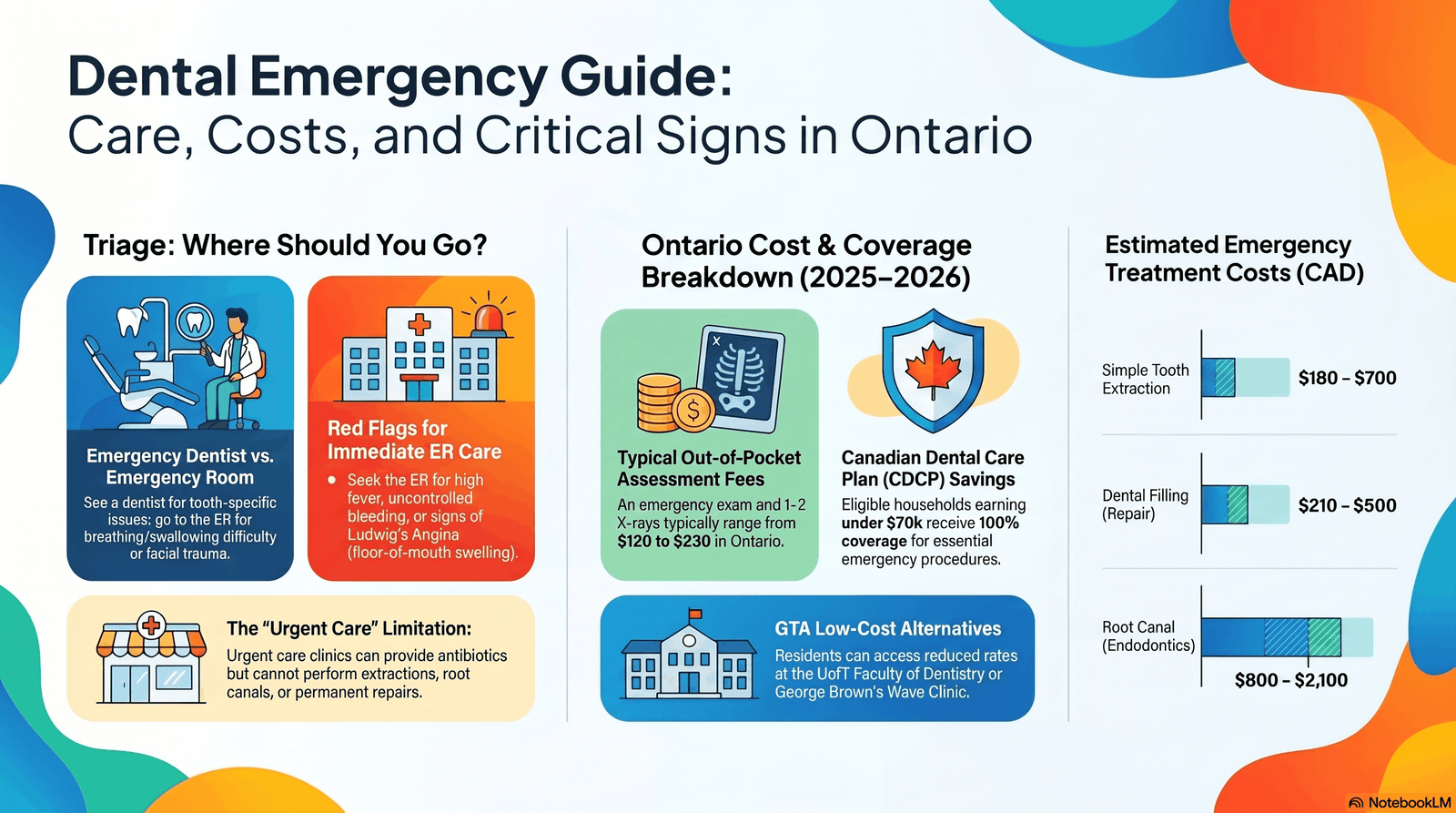
A hospital emergency room may help with severe facial swelling, fever, breathing difficulty, uncontrolled bleeding, or spreading infection. However, most ERs do not provide dental extractions. For tooth removal, you usually need an emergency dentist.
What happens if I delay removing a badly infected tooth?
Delaying treatment can allow the infection to spread to the jaw, gums, surrounding teeth, or other areas. It may also increase pain and make treatment more complicated. If swelling, fever, or severe pain is present, urgent care is important.
What Happens During an Emergency Tooth Extraction?
Your dentist will first examine your mouth and ask about your symptoms. They may take X-rays to see the roots, bone, infection, fracture pattern, and nearby teeth.
If extraction is needed, the area will be numbed. For a simple extraction, the dentist gently loosens the tooth and removes it.
For a more complex extraction, such as a broken tooth or impacted wisdom tooth, the dentist may need to section the tooth or make a small opening in the gum.
After the tooth is removed, the area is cleaned, and gauze is placed to help a blood clot form. This clot is important because it protects the socket and supports healing.
What Should You Do Before Your Appointment?
If you are waiting to see the dentist, avoid chewing on the painful side. Rinse gently with warm salt water if it feels comfortable.
Use a cold compress on the outside of the face for swelling. Take over-the-counter pain relief only as directed on the label or by a healthcare professional.
Do not place aspirin directly on the gum or tooth. This can burn the tissue. Do not ignore swelling, fever, or difficulty swallowing.
These symptoms may require urgent medical attention.
Recovery After an Emergency Tooth Extraction
Most patients recover well when they follow aftercare instructions. The first 24 hours are especially important.
You should bite gently on gauze as instructed, avoid smoking, avoid drinking through a straw, and avoid vigorous rinsing. These actions can disturb the blood clot and increase the risk of dry socket.
Soft foods are usually best at first. Yogurt, soup, scrambled eggs, smoothies eaten with a spoon, mashed potatoes, and soft pasta may be easier to manage. Avoid hard, crunchy, spicy, or very hot foods until the area begins to heal.
Some swelling, tenderness, and mild bleeding can be normal. But you should contact your dentist if pain gets worse after a few days, bleeding does not slow down, swelling increases, or you notice fever or pus.
What Can Replace an Extracted Tooth?
After the emergency is handled, your dentist may discuss tooth replacement options. Replacing a missing tooth is often important because gaps can affect chewing, speech, bite balance, and the position of nearby teeth.
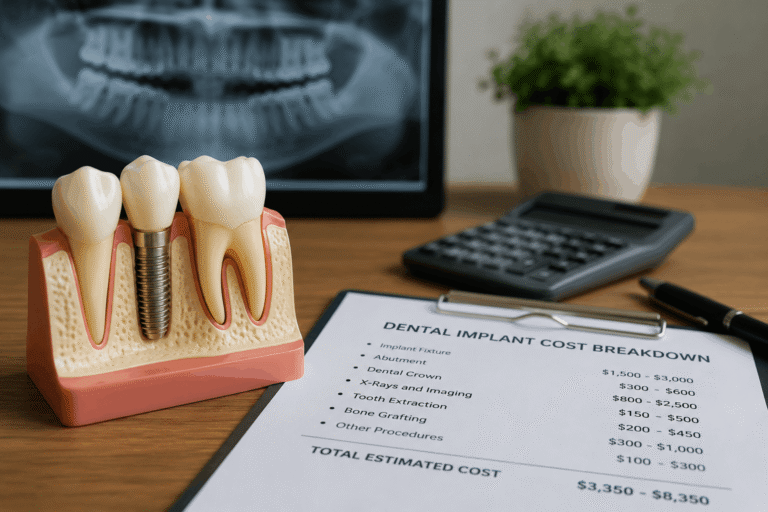
Common replacement options include dental implants, bridges, and partial dentures. The best option depends on your oral health, budget, bone support, and long-term goals.
A dental implant is often considered when the patient wants a fixed replacement that looks and functions like a natural tooth. A bridge may be recommended when nearby teeth can support it.
A partial denture may be useful when multiple teeth are missing or when a removable option is preferred.
Can Emergency Tooth Extraction Be Prevented?
Not every emergency can be prevented. Accidents happen. Teeth can crack unexpectedly. Wisdom teeth can flare up without much warning.
Still, many emergency extractions are linked to problems that build over time. Regular dental checkups, cleanings, X-rays, early cavity treatment, gum disease care, night guards for grinding, and prompt attention to tooth pain can reduce the chance of losing a tooth.
The earlier a dentist sees the problem, the more treatment options you usually have.
Why Choose White Tooth Dental in Toronto?
When you are in pain, you need clear answers quickly. White Tooth Dental in Toronto provides dental care for patients dealing with toothaches, broken teeth, infections, and urgent dental concerns.
The team can examine the tooth, explain whether it can be saved, and recommend the safest treatment plan. If extraction is necessary, the focus is on comfort, infection control, proper healing, and planning the next step for your smile.
If you are searching for emergency tooth extraction Toronto, do not wait for the pain to become unbearable. Book an appointment with White Tooth Dental in Toronto and get the care you need before the problem becomes more serious.
10 FAQs About Emergency Tooth Extraction in Toronto
1. What counts as a dental emergency?
A dental emergency includes severe tooth pain, swelling, infection, trauma, bleeding, or a broken tooth that needs urgent attention. If the pain is affecting your ability to eat, sleep, or function, call a dentist.
2. Can a dentist remove a tooth on the same day?
In many cases, yes. Same-day extraction may be possible if the dentist confirms that the tooth cannot be saved and it is safe to remove it immediately.
3. How long does an emergency tooth extraction take?
A simple extraction may take a short time once the area is numb. A complex extraction, such as a broken or impacted tooth, may take longer.
4. Will antibiotics fix an infected tooth?
Antibiotics may help control a spreading infection, but they do not repair the tooth or remove the source of the problem. A dentist may recommend a root canal, drainage, or extraction depending on the case.
5. Can a broken tooth always be saved?
No. Some broken teeth can be repaired with bonding, fillings, crowns, or root canal treatment. But if the tooth is cracked below the gumline or the root is fractured, extraction may be needed.
6. What should I eat after a tooth extraction?
Soft foods are best during early healing. Choose foods like yogurt, soup, eggs, mashed potatoes, and soft pasta. Avoid crunchy, hard, spicy, or very hot foods until your dentist says it is safe.
7. How long does healing take after extraction?
Initial healing often begins within a few days, but the socket can take several weeks to fully heal. Healing time depends on the tooth, the complexity of the extraction, and your overall health.
8. What is dry socket?
Dry socket happens when the protective blood clot in the extraction site is lost too early. It can cause strong pain and delayed healing. Avoid smoking, straws, and aggressive rinsing after extraction to lower the risk.
9. Do I need to replace the extracted tooth?
Often, yes. Replacing a missing tooth helps protect chewing function, bite alignment, and smile appearance. Your dentist may discuss implants, bridges, or dentures.
10. Where can I book emergency tooth extraction in Toronto?
You can book an appointment with White Tooth Dental in Toronto if you have severe tooth pain, swelling, infection, or a badly damaged tooth. A dentist can examine the area and recommend the right treatment.
Final Thoughts
A tooth extraction is never the first choice when a tooth can still be saved.
But when a tooth is badly infected, deeply decayed, fractured, loose, or causing serious pain, removing it may be the best way to protect your health.
If you are dealing with urgent tooth pain and searching for emergency tooth extraction Toronto, White Tooth Dental is here to help. Book an appointment today and take the first step toward relief, healing, and a healthier smile.