

You may not think much about how you breathe while sleeping. After all, you are asleep. But if you often wake up with dry mouth, bad breath, cracked lips, a sore throat, or morning tiredness, these may be mouth breathing at night symptoms your body is trying to show you. What feels like a small morning problem can slowly affect your sleep, teeth, gums, breath, and even your facial comfort over time.
Many adults ignore these signs because they seem harmless. You may blame dry mouth on not drinking enough water. You may blame bad breath on dinner from the night before.
You may think snoring is just normal. But when these problems keep happening, they may point to a breathing pattern that needs attention.
At White Tooth Dental in Toronto, patients often visit for dental problems like cavities, gum irritation, tooth sensitivity, or stained teeth without knowing that nighttime mouth breathing may be part of the issue.
If you are searching for a dentist in Bloor West Village, a dental checkup can help you understand whether your sleep habits are affecting your mouth.
What Is Mouth Breathing at Night?
Mouth breathing at night means you breathe mostly through your mouth while sleeping instead of your nose.
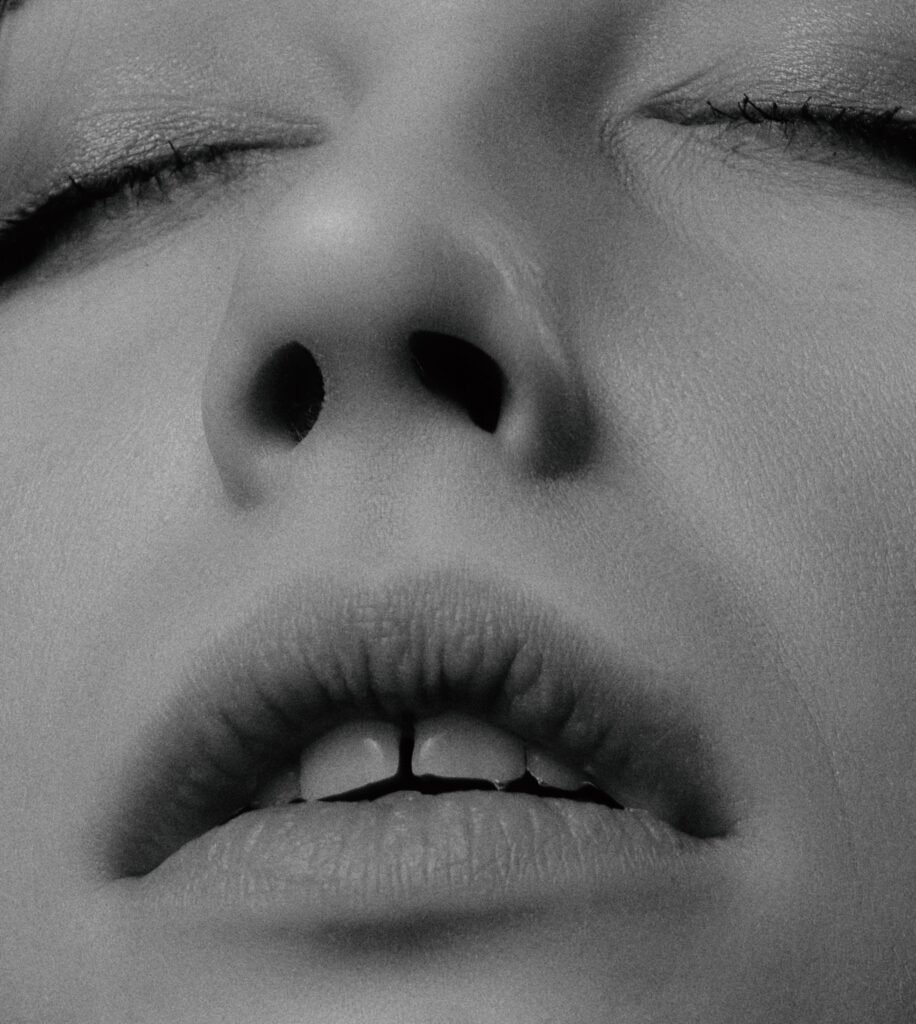
Your nose is designed to warm, filter, and moisten the air before it reaches your lungs. Your mouth can move air too, but it does not protect your teeth, gums, tongue, and throat in the same way.
When your mouth stays open during sleep, saliva dries out. Saliva is important because it helps clean your mouth, protect your teeth, and control bacteria.
Without enough saliva, your mouth becomes dry and more open to bad breath, plaque buildup, gum problems, and cavities.
This is why mouth breathing at night symptoms should not be ignored. They may seem small at first, but they can become more serious if the habit continues for months or years.
According to the Cleveland Clinic, mouth breathing can be linked with dry mouth, bad breath, snoring, tiredness, and dental health problems.
Common Mouth Breathing at Night Symptoms in Adults
One of the most common questions people ask is, “How do I know if I mouth breathe at night?”
Since you are asleep when it happens, the signs usually show up after you wake up.
Common mouth breathing at night symptoms include:
- Dry mouth in the morning
- Bad breath after waking up
- Sore or scratchy throat
- Cracked or dry lips
- Waking up thirsty
- Snoring or noisy breathing
- Drooling on the pillow
- Morning headaches
- Feeling tired even after sleeping
- Brain fog during the day
- More cavities than usual
- Red, swollen, or bleeding gums
A sleeping partner may also notice that your mouth stays open while you sleep.
They may hear snoring, gasping, or pauses in breathing. These signs deserve attention, especially if they happen often.
Why Do Adults Breathe Through Their Mouth at Night?
There is not always one clear cause. For many adults, mouth breathing starts because the nose is blocked. This can happen because of allergies, sinus problems, nasal congestion, a cold, or a deviated septum.
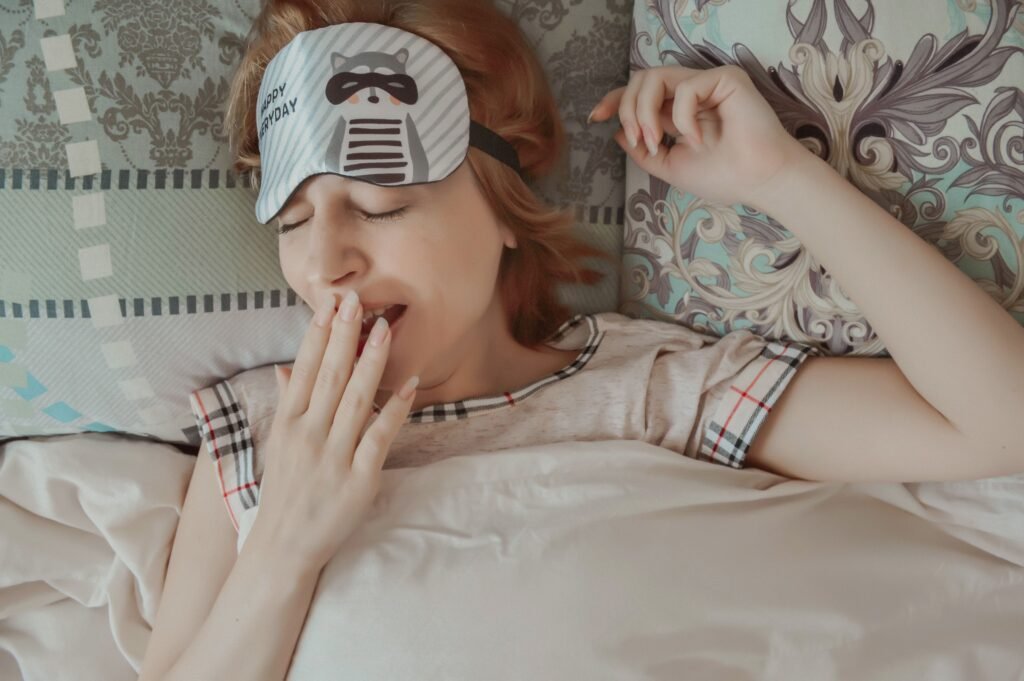
Some adults breathe through their mouth because of jaw position, tooth alignment, or difficulty keeping the lips closed comfortably during sleep.
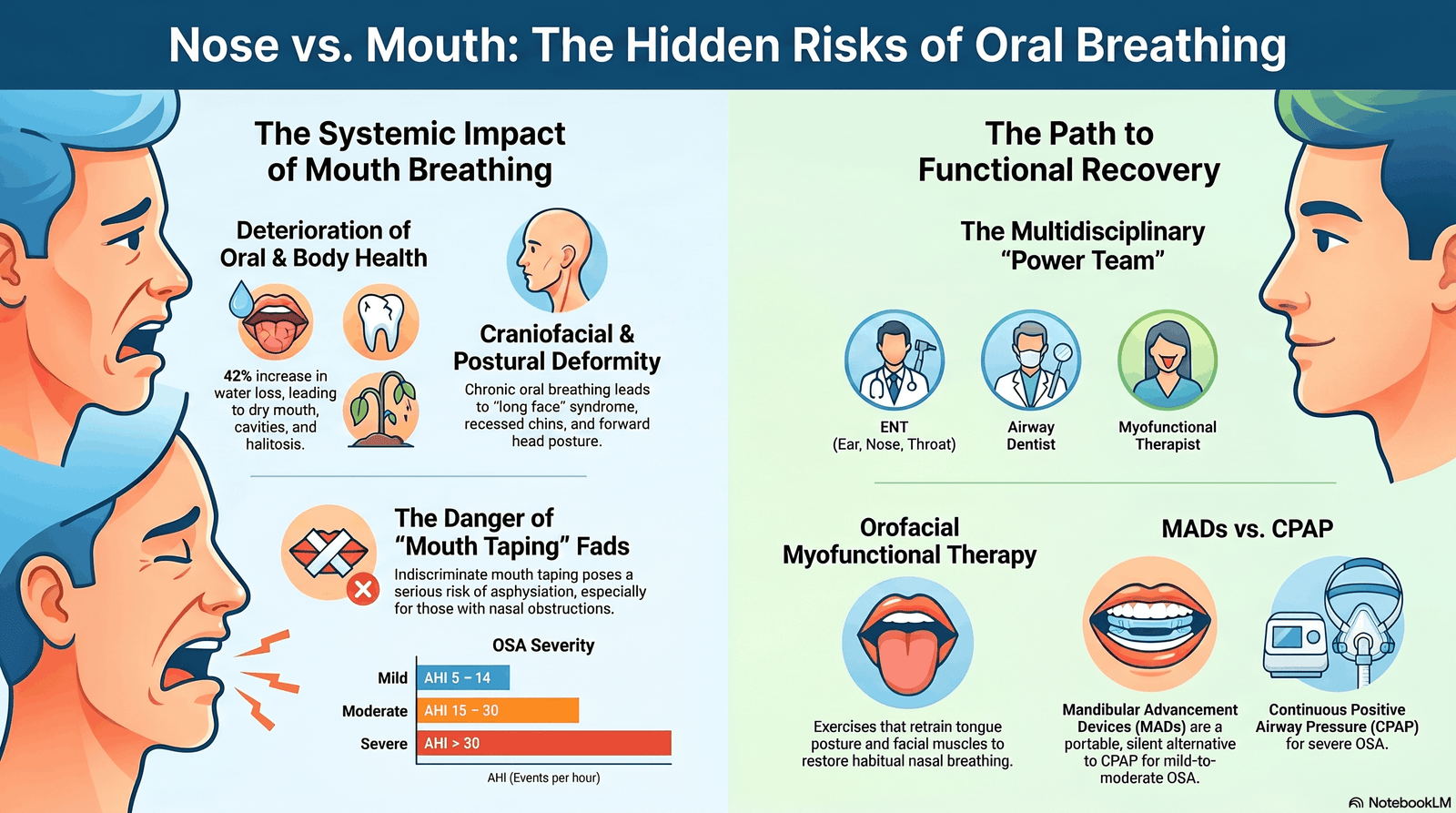
Others may mouth breathe because of snoring or sleep apnea. Sleep apnea is a condition where breathing repeatedly stops and starts while sleeping.
Stress, alcohol before bed, sleeping on your back, and certain medications can also make dry mouth or snoring worse.
The important thing is this: mouth breathing at night symptoms are not something you should simply cover up. You need to understand why they are happening.
How Mouth Breathing Affects Sleep
Mouth breathing can make sleep less restful. When your mouth and throat dry out, you may wake up more often. You may not fully remember waking up, but your body still loses steady, deep sleep.
This can leave you feeling tired the next morning. You may need more coffee, struggle to focus, or feel foggy during the day. Morning headaches can also happen when breathing is not smooth during sleep.
Many people with mouth breathing at night symptoms also snore. Snoring happens when air does not move easily through the airway.
If snoring is loud, regular, or followed by gasping or choking sounds, it may be a sign of sleep apnea. In that case, you should speak with a healthcare provider or sleep specialist.
A dentist may not diagnose sleep apnea during a regular checkup, but they may notice warning signs in your mouth that suggest your airway and sleep should be checked.
How Mouth Breathing Affects Oral Health
Your mouth needs moisture to stay healthy. Saliva helps protect your teeth from acid, bacteria, and food particles.
When you breathe through your mouth all night, saliva dries up. This can make your teeth and gums more vulnerable.
Over time, mouth breathing at night symptoms may be connected to:
- Bad breath
- Sticky saliva
- Plaque buildup
- Tooth decay
- Gum irritation
- Tooth sensitivity
- Dry or burning mouth
- Stains on teeth
- Higher risk of infection
This matters because small dental problems can become painful if they are not treated early. A cavity may start small, but if decay reaches deeper into the tooth, you may eventually need more serious treatment, such as a root canal in Toronto.
This does not mean every mouth breather will need a root canal. But it does show why dry mouth, cavities, and gum problems should be checked before they get worse.
Can Mouth Breathing Affect the Look of Your Smile?
Yes, it can affect how your smile looks and feels.
When your mouth is often dry, stains may build up more easily. Bad breath can become harder to control. Gum tissue may look red or irritated. Teeth may also become more sensitive, especially if there is enamel wear or decay.
People searching for white teeth in Toronto often think first about whitening. But a bright smile starts with a healthy mouth. If dry mouth, plaque, gum inflammation, or cavities are present, whitening alone may not give the best result.
Before focusing on cosmetic improvements, it is smart to make sure your mouth is healthy.
A dentist can check whether mouth breathing at night symptoms are affecting your teeth, gums, and overall smile.
Can Mouth Breathing Affect Facial Development?
This question often comes up because many people hear that mouth breathing can change the face.

In children, long-term mouth breathing can affect jaw growth, tooth position, and facial development because their bones are still growing. In adults, facial bones are already developed, so mouth breathing will not reshape the face in the same way.
However, adults can still experience changes in comfort and function. Mouth breathing may affect tongue posture, jaw tension, bite comfort, and facial muscle habits.
If the mouth stays open often, the tongue may rest lower than normal instead of resting gently near the roof of the mouth.
So, while adult facial development is mostly complete, mouth breathing at night symptoms can still affect oral comfort, jaw function, and smile health over time.
Is Sleeping With Your Mouth Open Bad?
Sleeping with your mouth open once in a while is usually not a big problem. For example, if you have a cold or blocked nose, your body may use mouth breathing for a few nights.
But if it happens regularly, it can become a concern. Chronic mouth breathing can dry your mouth, disturb your sleep, increase bad breath, and raise the risk of tooth and gum problems.
If you wake up with dry mouth most mornings, do not dismiss it. Repeated mouth breathing at night symptoms are your body’s way of saying something may need attention.
How Do You Stop Mouth Breathing at Night?
The right solution depends on the cause. There is no one-size-fits-all answer.
Some people may benefit from drinking more water, using a humidifier, sleeping on their side, or managing allergies. Others may need help with nasal blockage, snoring, jaw position, or possible sleep apnea.
Be careful with mouth taping. It may look simple online, but it is not safe for everyone. If your nose is blocked or you may have sleep apnea, taping your mouth can make breathing harder. It is better to speak with a dental or medical professional first.
A dentist can check your mouth for signs of dryness, tooth wear, cavities, gum irritation, and bite issues. If needed, they may suggest a night guard, dental treatment, or a referral to a doctor, ENT specialist, or sleep specialist.
When Should You See a Dentist?
You should book a dental checkup if you often wake up with dry mouth, bad breath, sore throat, cracked lips, bleeding gums, tooth sensitivity, or new cavities.
A dentist can help you understand whether mouth breathing at night symptoms are affecting your oral health. They can also check for damage that you may not see at home.
If you are looking for a dentist in Bloor West Village, White Tooth Dental in Toronto can help you take the next step. A dental checkup can give you answers, protect your smile, and help prevent small issues from becoming bigger problems.
FAQs About Mouth Breathing at Night Symptoms
1. What are the most common mouth breathing at night symptoms?
The most common mouth breathing at night symptoms include dry mouth, bad breath, sore throat, cracked lips, snoring, morning headaches, waking up thirsty, and feeling tired during the day.
2. Can mouth breathing at night cause cavities?
Yes. Mouth breathing can dry out saliva, and saliva helps protect your teeth. When your mouth stays dry often, bacteria and acids can harm your teeth more easily.
3. Is mouth breathing at night linked to sleep apnea?
It can be. Mouth breathing does not always mean sleep apnea, but loud snoring, gasping, choking, or pauses in breathing should be checked by a healthcare provider.
4. Can a dentist tell if I breathe through my mouth at night?
A dentist may notice signs such as dry mouth, gum irritation, cavities, bad breath, enamel wear, or tooth grinding. These signs can suggest that nighttime mouth breathing may be affecting your oral health.
5. Can mouth breathing affect how my teeth look?
Yes. Mouth breathing can lead to dryness, stains, plaque buildup, gum redness, and cavities. These issues can affect the appearance of your smile over time.
6. Should I use mouth tape to stop mouth breathing?
Do not use mouth tape without professional advice. If your nose is blocked or you have possible sleep apnea, mouth taping may be unsafe. It is better to find the cause first.
Final Thoughts
Mouth breathing while sleeping may seem harmless, but the signs can build up over time. Dry mouth, bad breath, sore throat, snoring, tiredness, tooth sensitivity, and gum irritation are not random problems when they happen often.
If you have noticed mouth breathing at night symptoms, do not wait until your teeth or gums become painful. Book a dental checkup with White Tooth Dental in Toronto.
A simple visit can help you understand what is happening, protect your oral health, and keep your smile feeling fresh, healthy, and confident.