

You book a dental cleaning thinking it is just another quick polish-and-go visit. Then your dentist says, “You may need scaling.” Suddenly it sounds more serious, more expensive, and maybe a little intimidating. Here is the good news: hearing that you may need dental scaling does not automatically mean something is terribly wrong. It usually means your gums need more attention than a routine cleaning can provide. And catching that early is exactly what helps protect your smile.
If you have been wondering what is dental scaling, how it compares to a regular cleaning, and whether your symptoms point to something deeper, this guide will walk you through it in plain English.
What is dental scaling?
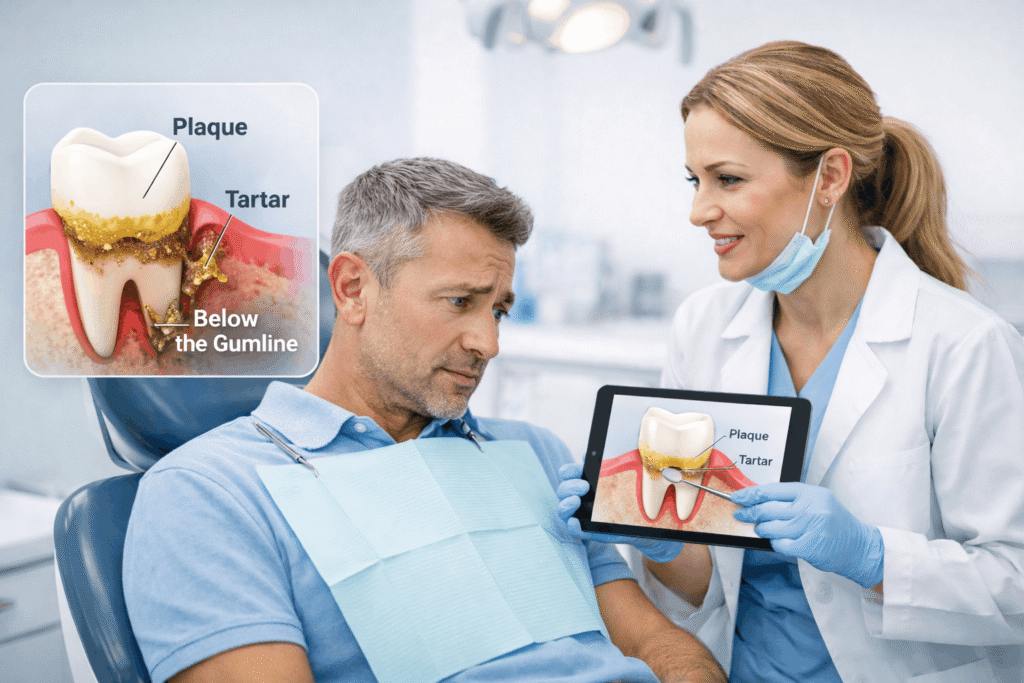
Dental scaling is a professional deep-cleaning treatment used when plaque and tartar have built up not only on the visible part of your teeth, but also below the gumline.
It is often paired with root planing, which smooths the root surfaces so bacteria are less likely to cling there again, and your gums can heal more effectively. In other words, scaling is not just about making teeth look cleaner.
It is about treating the early or moderate signs of gum disease and helping stop it from getting worse.
A regular cleaning is usually meant for maintenance. Dental scaling is usually recommended when your gums are inflamed, bleeding, or showing signs that bacteria and tartar have moved deeper under the gumline.
That deeper buildup cannot be handled the same way as a standard hygiene visit.
Why dental scaling matters more than many people realize
Gum disease is not rare. In fact, the CDC says about 4 in 10 U.S. adults age 30 and older had some level of periodontitis, and NIDCR also notes that about 2 in 5 adults are affected by some form of periodontal disease.
That is a big reason why questions like what is dental scaling come up so often in dental offices.
What starts as mild gum irritation can progress. NIDCR explains that gum disease often begins with swollen, red, and bleeding gums.
If it is not treated, it can spread to the supporting tissues and bone around the teeth, which can lead to chewing pain, loose teeth, and eventually tooth loss.
That is why scaling is less about “extra cleaning” and more about early intervention.
Teeth scaling vs cleaning: what is the real difference?
This is where many patients get confused.
A regular dental cleaning
A regular cleaning is typically recommended when your gums are generally healthy. It removes plaque and tartar from the visible surfaces of the teeth and helps maintain oral health between checkups.
Dental scaling and root planing
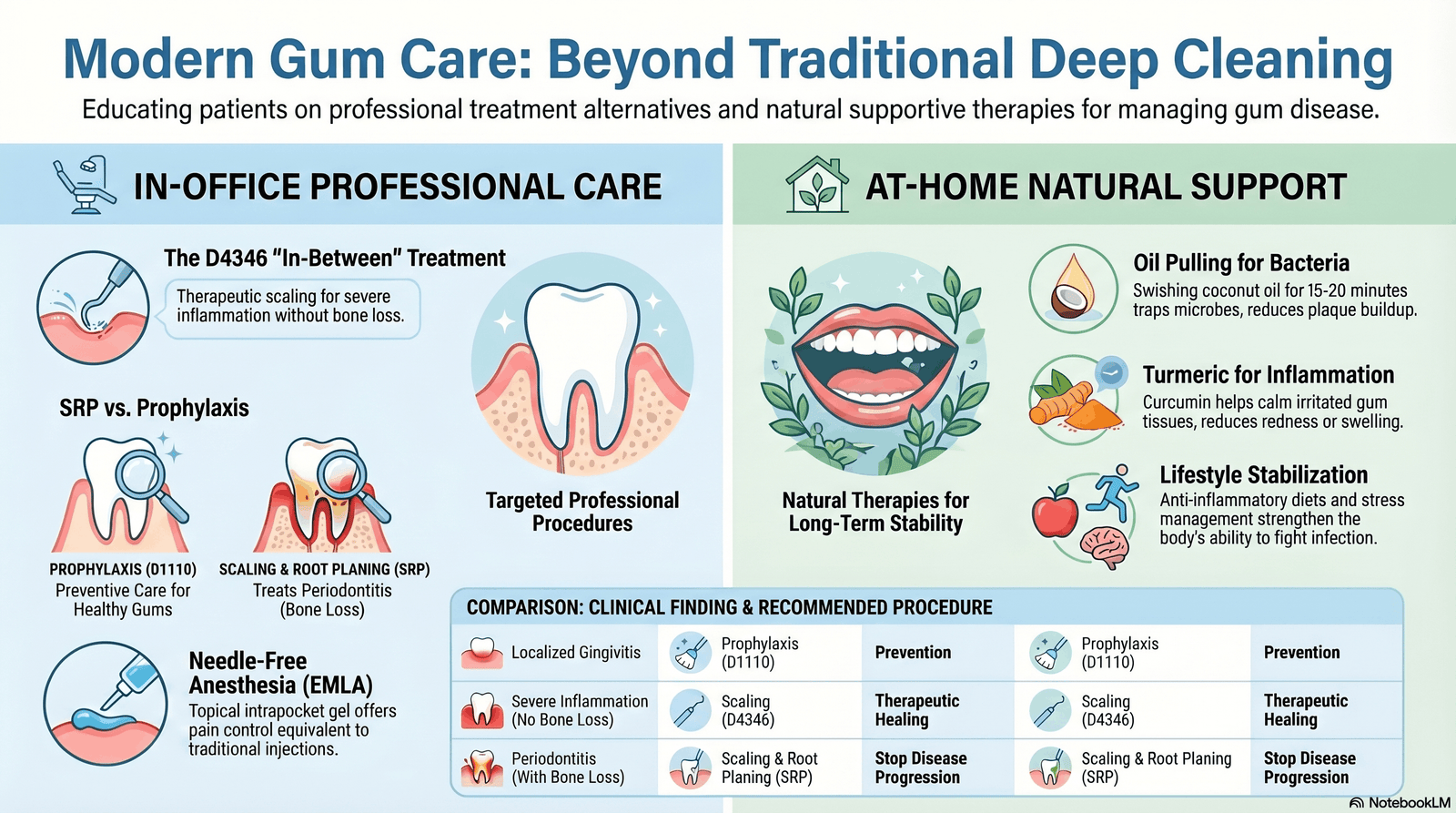
Scaling and root planing are usually recommended when your dentist sees signs of gum disease.
Mayo Clinic notes that dentists may also measure the pocket depth around your teeth. In a healthy mouth, the pocket depth is generally 1 to 3 mm, while pockets deeper than 4 mm may suggest gum disease.
That deeper bacterial buildup is where a routine cleaning may not be enough. So when people search teeth scaling vs cleaning, the simplest answer is this:
A cleaning maintains healthy gums.
Scaling treats gums that are already irritated, infected, or starting to pull away from the teeth.
Signs you may need more than a regular cleaning

Sometimes the clues are obvious. Other times they are easy to brush off.
Your gums bleed when you brush or floss
A little pink in the sink is not something to ignore. Bleeding gums are one of the classic early signs of gum inflammation and gum disease.
Your gums look swollen, red, or tender
Healthy gums usually look firm and pink. If your gums feel puffy, sore, or appear redder than usual, your mouth may be signaling that bacteria have been sitting there too long.
You have bad breath that does not go away
Persistent bad breath is not always just a food issue. It can also be a sign that plaque, tartar, and bacteria are trapped around or beneath the gumline.
Your teeth look longer than they used to
If your teeth suddenly seem longer, your gums may be receding. NIDCR notes that gum disease can make the gums pull away from the teeth, exposing more of the tooth surface.
Your teeth feel sensitive or loose
Loose teeth, chewing discomfort, or unexplained sensitivity can happen when gum disease has moved beyond the early stage.
Your dentist mentions tartar below the gumline or deeper pockets
This is one of the clearest signs. NIDCR explains that once plaque hardens into tartar, only a dental professional can remove it. If that buildup sits below the gumline, scaling may be the right next step.
What happens during dental scaling?
Dental scaling removes tartar and bacteria from the tooth surfaces and from beneath the gums.
This may be done with hand instruments, an ultrasonic device, and sometimes other tools depending on the case. Root planing then smooths the root surfaces, which helps reduce future buildup and supports gum healing.
For many patients, the biggest relief is simply understanding that the goal is to stop progression. Scaling is often recommended to prevent a small gum problem from turning into a much bigger one.
Bruxism and diet: do they play a role?
This is a smart question, especially because people often mix several mouth issues together.
Bruxism and gum symptoms
Bruxism and diet may not directly cause the same problem, but they can absolutely affect your overall oral health picture.
NIDCR describes bruxism as grinding, clenching, or thrusting of the jaw, often without realizing it.
Bruxism can cause tooth wear, tension, soreness, and sensitivity, which sometimes makes people think they need one type of treatment when the real issue could be something else.
Bruxism does not create tartar by itself. But if you grind your teeth and also have gum inflammation, your mouth can feel worse overall and the symptoms may overlap.
Diet and plaque buildup
Diet matters because added sugar and frequent acidic or sugary snacks can contribute to oral disease.
CDC guidance for adults recommends limiting foods and drinks with added sugar, and CDC also notes that eating or drinking sugary or acidic items between meals raises cavity risk.
So when people bring up bruxism and diet, the practical takeaway is this: grinding may stress your teeth and jaw, while a high-sugar diet can fuel plaque and gum problems.
They are different issues, but both can push your mouth in the wrong direction.
Is dental scaling the same as a root canal?
No, and this distinction matters.
Dental scaling treats buildup and infection around the gums and root surfaces. A root canal treats infection inside the tooth, specifically the pulp.
The American Association of Endodontists explains that root canal treatment removes inflamed or infected pulp from inside the tooth, then cleans, disinfects, fills, and seals that space to save the natural tooth.
So if someone is searching for a root canal in Toronto, the actual problem might be inside the tooth, or it might be in the gums around the tooth. They are not interchangeable treatments.
One focuses on periodontal disease. The other focuses on infection in the inner tooth structure. A proper exam is what separates the two.
Why people delay scaling and why that can backfire
A lot of people delay scaling because they assume bleeding gums are normal, or they think a stronger brushing routine at home will solve everything.
The problem is that once plaque hardens into tartar, brushing alone cannot remove it. Professional treatment is needed.
That delay can allow inflammation to continue quietly. Gum disease often does not feel dramatic at first. It just lingers in the background until the signs become harder to ignore.
People Also Ask
What is dental scaling in simple terms?
Dental scaling is a deeper professional cleaning that removes tartar and bacteria from above and below the gumline. It is often done when there are signs of gum disease and is commonly paired with root planing to help the gums heal.
How do I know if I need scaling instead of a regular cleaning?
You may need scaling if your gums bleed easily, feel swollen or tender, pull away from the teeth, or if your dentist finds deeper gum pockets or tartar below the gumline.
Teeth scaling vs cleaning: which one do I need?
If your gums are healthy, a regular cleaning may be enough. If your gums show signs of inflammation or early periodontitis, scaling may be the better treatment because it targets buildup below the gumline.
Can bruxism and diet make dental problems worse?
Yes. Bruxism can lead to clenching, grinding, soreness, and wear, while a sugar-heavy diet can contribute to plaque-related oral disease. They do not replace the need for a dental diagnosis, but they can make your mouth more vulnerable overall.
Is scaling the same as getting a root canal?
No. Scaling treats gum-related buildup and infection around the tooth. A root canal treats infection inside the tooth pulp.
Final thoughts
If your mouth has been giving you warning signs like bleeding gums, bad breath, gum tenderness, or teeth that suddenly feel more sensitive than usual, it may be time to stop thinking in terms of “just a cleaning.”
Sometimes the real issue is deeper, and that is exactly where dental scaling can help. The earlier gum problems are spotted, the easier they usually are to manage.
And if you are not sure whether you need a routine cleaning, scaling, or even something entirely different like a root canal, the most helpful next step is a proper exam.
If you would like clarity about what your gums are really telling you, consider scheduling a visit with the dentists at White Tooth Dental. A simple appointment can give you answers, peace of mind, and a healthier plan moving forward.