

You wake up with a tight jaw. Your temples feel heavy. One tooth feels oddly sensitive when you sip coffee. Maybe your partner has mentioned that strange grinding sound at night, or maybe your dentist was the first person to notice the flattened edges on your teeth.
Then, like most people do, you search online.
Within minutes, you find magnesium, vitamin D, calcium, B vitamins, omega-3, herbal teas, sleep gummies, and “jaw relaxation” capsules all claiming to help. The idea sounds comforting: take the right supplement, relax the jaw, stop the grinding.
But is it really that simple? The honest answer is,
Supplements for teeth grinding may help some people, especially when a deficiency, stress, poor sleep, or muscle tension is part of the picture. But they are not a standalone cure for bruxism, and they cannot repair damage already done to your teeth.
That distinction matters. Because teeth grinding is not just a “bad habit.” It can be connected to stress, sleep quality, caffeine, alcohol, medications, jaw muscle activity, bite issues, and even damaged dental restorations.
The Canadian Dental Association notes that bruxism can be aggravated by stress, interrupted sleep, misaligned teeth, and missing teeth, and recommends seeing a dentist early to limit damage.
So before you spend money on another bottle of “jaw calming” supplements, let’s unpack what actually makes sense.
What Is Teeth Grinding?
Teeth grinding, also called bruxism, is the involuntary grinding, clenching, or gnashing of teeth. It can happen while you are awake or while you sleep.
Awake bruxism is often easier to notice. You may catch yourself clenching during work, eating disorder, scrolling your phone, or concentrating. Sleep bruxism is trickier because you may not know it is happening until symptoms show up.

Common signs include:
- Morning jaw stiffness
- Headaches around the temples
- Tooth sensitivity
- Worn, flattened, chipped, or cracked teeth
- Sore facial muscles
- Clicking or tiredness in the jaw
- Broken fillings, crowns, or bonding
- A partner hearing grinding sounds at night
The National Institute of Dental and Craniofacial Research lists chipped, cracked, loose, or flattened teeth, worn enamel, tooth pain, jaw soreness, tightness, tired jaw muscles, headaches, and facial pain among common signs of bruxism.
That is why the question is not only “Can supplements help teeth grinding?” The better question is:
What is causing your grinding, and has it already damaged your teeth?
Why Supplements Became Popular for Bruxism
Supplements entered the bruxism conversation because jaw muscles, sleep quality, nerve function, stress response, and inflammation are all connected to nutrients in some way.
For example, magnesium plays a role in muscle and nerve function. The NIH Office of Dietary Supplements explains that magnesium is involved in more than 300 enzyme systems, including those related to muscle and nerve function.
That makes magnesium sound like a logical choice for jaw tension. If your muscles are tight and your sleep is poor, magnesium might support relaxation. But “supports relaxation” is not the same as “stops bruxism.”
Bruxism is usually multifactorial. You may grind because of stress, sleep disruption, caffeine, alcohol, certain medications, airway issues, bite problems, or a combination of several factors.
Supplements may support one part of that picture, but they rarely address the whole thing.
Magnesium for Teeth Grinding: Helpful or Overhyped?
Magnesium is probably the most commonly discussed supplement for teeth grinding. It is often marketed as a muscle relaxer, sleep-support mineral, or stress-support nutrient.
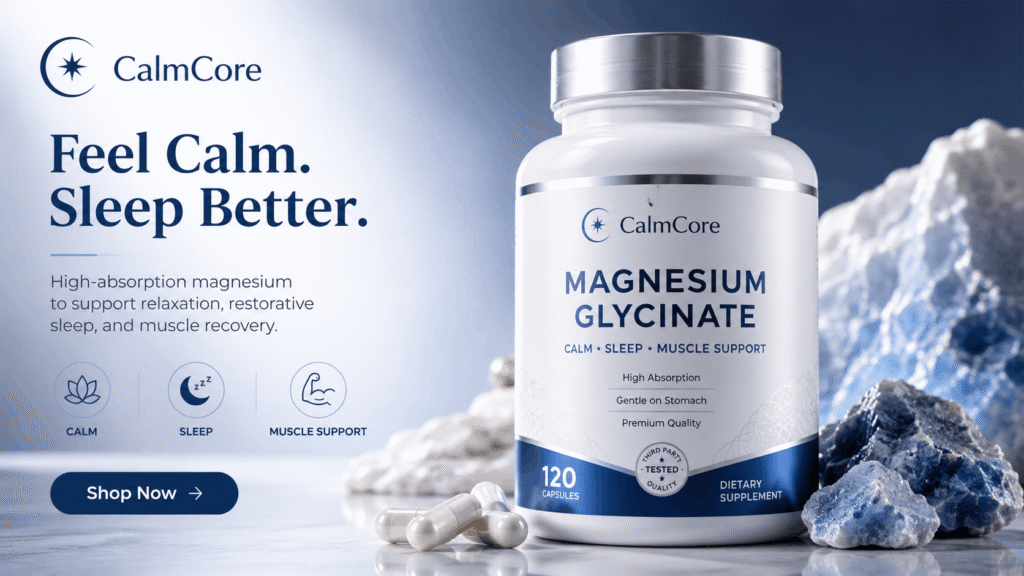
Could it help? Possibly, especially if someone has low magnesium intake, muscle tension, restless sleep, or stress-related clenching.
But there are three important warnings.
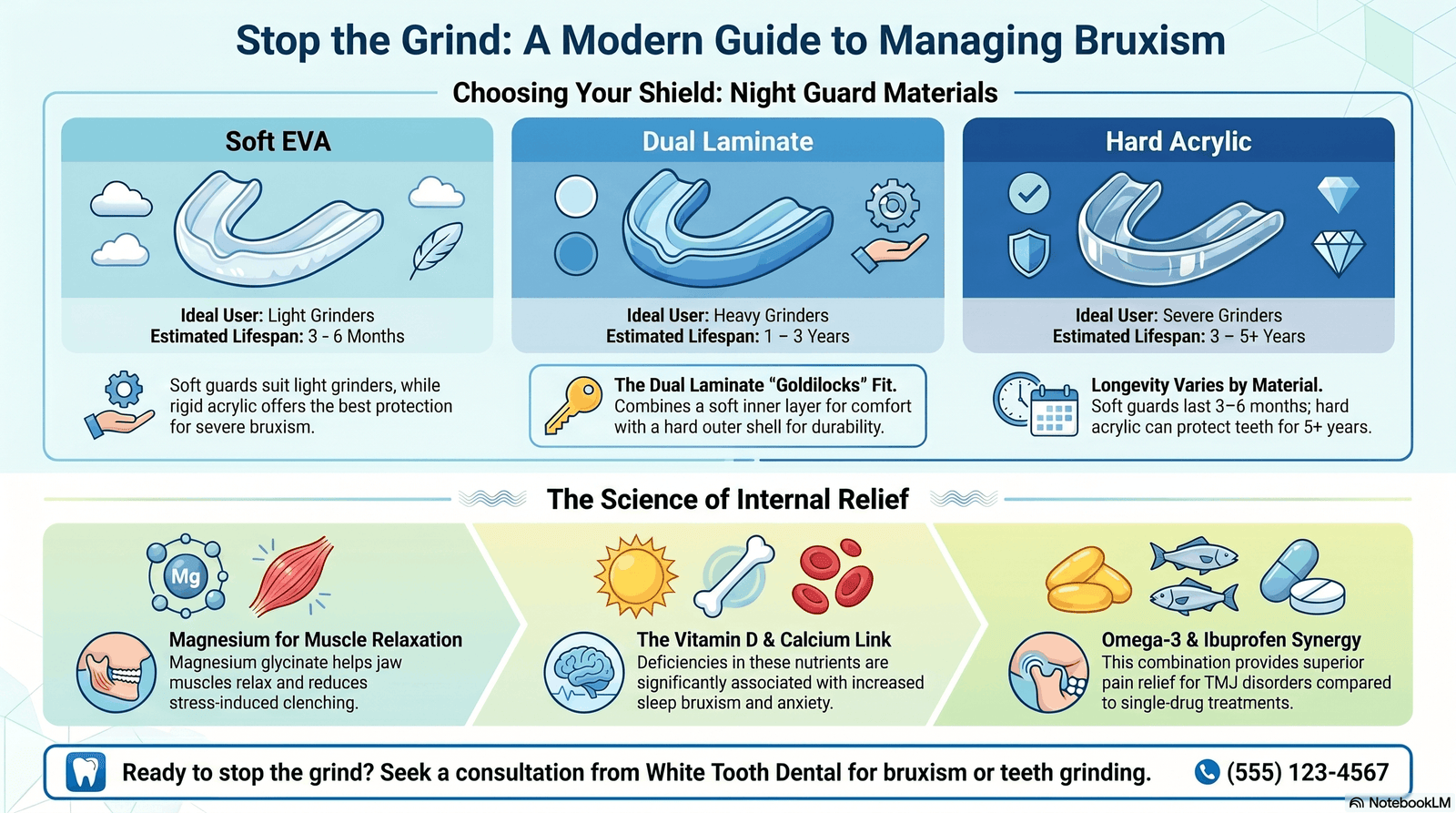
First, magnesium is not a mouth guard. It does not physically protect enamel from grinding forces. If you are grinding heavily at night, your teeth may still wear, chip, or crack.
Second, magnesium does not fix a damaged bite, cracked tooth, failing crown, or inflamed nerve.
Third, more is not always better. Magnesium supplements can cause digestive side effects, and people with kidney problems or those taking certain medications should be careful.
Magnesium status can also be difficult to assess because much of the body’s magnesium is inside cells or bone, not simply floating in the blood.
So yes, magnesium may be part of a bruxism support plan. But it should not be treated like a cure.
Vitamin D and Bruxism: What Is the Connection?
Vitamin D is another nutrient often linked to teeth grinding because it supports bone health, muscle function, immune function, and general wellness.

Some articles suggest that low vitamin D may indirectly worsen jaw tension, poor sleep, mood issues, or muscle pain. That does not prove vitamin D deficiency causes teeth grinding. It simply means vitamin D may be one piece of a larger health picture.
A smart approach is to avoid guessing. If you suspect low vitamin D, ask your physician about testing. Supplementing blindly may not solve the problem, and it may distract you from the real cause of your symptoms.
For Toronto patients, this is especially relevant during darker months when many people spend less time in sunlight.
But again, even if vitamin D support helps your overall health, it will not repair enamel, rebuild a chipped tooth, or prevent a crack from spreading.
Calcium, B Vitamins, and Omega-3: Are They Worth Considering?
Calcium supports bones and teeth. B vitamins support nerve function and energy metabolism. Omega-3 fatty acids may support inflammation balance.
These nutrients matter for general health. But there is a difference between “good for your body” and “proven to stop teeth grinding.”
That is where many supplement articles become too optimistic. They list nutrients that sound relevant, then imply that taking them will meaningfully reduce bruxism. A more responsible view is this:
Supplements may help if your body is missing something. They are far less likely to help if your grinding is mainly caused by stress, sleep apnea, medication, bite changes, or an untreated dental issue.
This is why a dentist in Toronto should examine your teeth, jaw, bite, restorations, and symptoms before you build your whole plan around supplements.
The Missing Part: Supplements Cannot Undo Grinding Damage
This is the part many supplement-focused articles do not explain clearly enough.
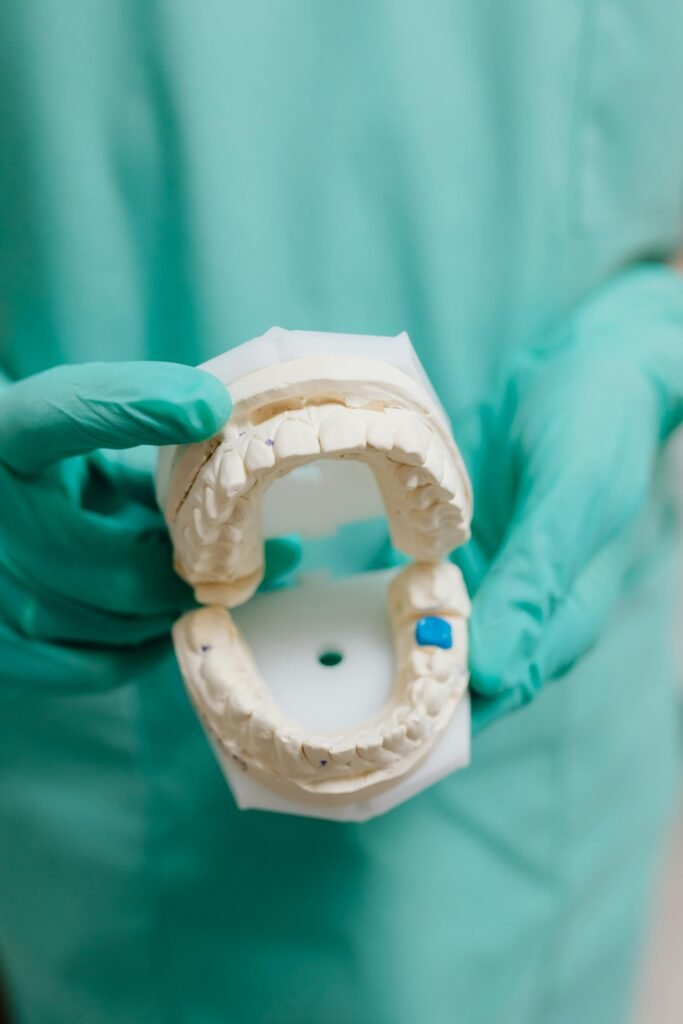
If your teeth grinding has already caused enamel wear, sensitivity, cracks, loose restorations, or pain when chewing, supplements cannot reverse that structural damage.
A cracked tooth may need bonding, a filling, a crown, or another restorative treatment. If the crack or repeated trauma irritates the nerve inside the tooth, you may eventually need a root canal in Toronto to save the tooth.
This does not mean every bruxism patient will need a root canal. Most will not. But grinding creates repeated pressure. Over time, that pressure can weaken teeth, damage fillings, fracture crowns, and expose sensitive tooth layers.
White Tooth Dental’s general dentistry page specifically mentions care for toothaches, cracks, cavities, cracked tooth repair, fillings, crowns, and dental bonding in Toronto. That is the kind of clinical support supplement articles often leave out.
When Teeth Grinding Might Require a Dentist Quickly
Book a dental appointment if you notice:
- Tooth pain that does not go away
- A sharp pain when biting
- Sensitivity to hot or cold
- A chipped or cracked tooth
- A filling or crown that feels loose
- Jaw pain that is getting worse
- Morning headaches with tooth soreness
- Teeth that look shorter or flatter than before
- Gum recession or notches near the gumline
If you have swelling, fever, severe pain, or facial swelling, do not wait. Those may suggest infection or a more urgent dental problem.
People Also Ask: Supplements, Bruxism, and Dental Treatment
1. What vitamin deficiency causes teeth grinding?
No single vitamin deficiency has been proven to cause all cases of teeth grinding. However, low levels of magnesium, vitamin D, calcium, or certain B vitamins may contribute to muscle tension, poor sleep, or nervous system imbalance in some people. Bruxism is usually caused by several factors, not one deficiency.
2. Does magnesium stop teeth grinding?
Magnesium may help some people relax tense muscles or sleep better, especially if they are not getting enough magnesium. But it does not physically stop grinding, protect enamel, or treat damaged teeth. If you grind at night, you may still need a custom night guard and a dental exam.
3. What is the best supplement for teeth grinding?
There is no universal “best” supplement for teeth grinding. Magnesium is the most commonly discussed, followed by vitamin D, calcium, B vitamins, and omega-3. The best option depends on your diet, health history, medications, and whether you actually have a deficiency.
4. Can teeth grinding damage a tooth badly enough to need a root canal?
Yes, in some cases. Heavy grinding can crack a tooth, wear down enamel, or repeatedly stress a tooth until the nerve becomes irritated or infected. If the inner pulp is affected, a dentist may recommend root canal treatment to save the tooth.
5. Should I see a dentist before taking supplements for bruxism?
Yes, especially if you have pain, sensitivity, visible wear, or cracked teeth. A dentist can check whether your symptoms are caused by bruxism, tooth decay, gum issues, a damaged filling, or another condition. Supplements may support wellness, but diagnosis should come first.
6. Can a night guard cure bruxism?
A night guard does not usually cure bruxism, but it can protect your teeth from grinding damage. The Canadian Dental Association notes that a custom mouth guard can create a physical barrier between the upper and lower teeth and help even out jaw pressure.
7. Can stress cause teeth grinding?
Yes. Stress and anxiety are common contributors to bruxism. Relaxation, counselling, exercise, sleep improvement, and awareness techniques may help reduce clenching, especially during the day.
8. When should I look for a dentist in Toronto for teeth grinding?
Look for a dentist in Toronto if you have jaw pain, morning headaches, tooth sensitivity, chipped teeth, worn enamel, cracked fillings, or pain when biting. Early care can help prevent more serious damage.
A More Realistic Bruxism Plan
Instead of asking, “Which supplement stops teeth grinding?” it is better to build a layered plan.
Start with a dental exam. Your dentist can look for wear patterns, cracks, bite issues, damaged fillings, gum recession, and jaw tenderness.
Then review your habits. Do you clench during work? Drink caffeine late? Use alcohol to unwind? Sleep poorly? Wake up tired? Take medications that may affect jaw muscle activity?
Next, consider nutrition. If your diet is low in magnesium-rich foods, calcium, vitamin D, or omega-3 sources, improving nutrition may help your overall health.
Supplements can be considered after speaking with a dentist, physician, pharmacist, or dietitian.
Finally, protect your teeth. If you grind at night, a custom night guard may reduce damage.
So, Do Supplements for Teeth Grinding Really Help?
They can help some people. But they are not magic.
Supplements for teeth grinding are most useful when they address a real nutritional gap or support a broader plan for sleep, stress, muscle tension, and overall health.
They are least useful when they are used as a shortcut while tooth damage continues.
If your jaw feels tight but your teeth are healthy, supplements and lifestyle changes may be worth discussing.
If your teeth are sensitive, cracked, worn, or painful, you need more than a supplement bottle. You need a proper dental diagnosis.
Final Takeaway
Teeth grinding can seem harmless at first. A little jaw tension. A headache here and there. A tooth that feels “off” but not bad enough to call about.
But bruxism can quietly wear down your smile over months or years. Supplements may support your body, but they cannot diagnose the cause, protect enamel, repair cracks, replace a night guard, or treat nerve damage.
If you are dealing with teeth grinding, jaw pain, tooth sensitivity, cracked teeth, or concerns about whether you may need a root canal in Toronto, book an appointment with White Tooth Dental on Bloor Street in Toronto. Their team provides general dentistry in the Bloor West neighbourhood and sees patients for toothaches, cracks, cavities, and comprehensive oral health care.
White Tooth Dental is located at 2425 Bloor St W, Suite 312, Toronto, ON M6S 4W4, and can be reached at 416-766-4535.