
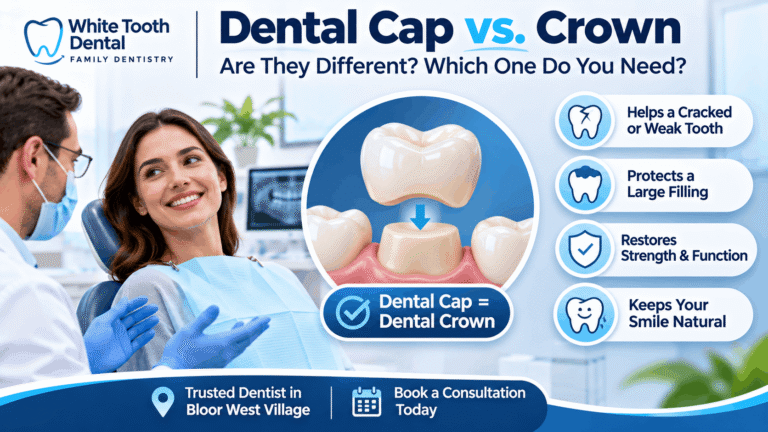

A cracked tooth can make something as simple as biting into an apple uncomfortable. A large filling may also leave a tooth feeling weak, even when it does not hurt. If your dentist has mentioned a “cap” or a “crown,” you may wonder whether these are two different treatments—and which one will protect your smile.
The reassuring answer is that a dental cap and a dental crown are usually the same restoration. “Cap” is the everyday term, while “crown” is the term dental professionals commonly use. The more important question is whether your tooth needs a full-coverage restoration or whether a less extensive treatment could work.
If you are researching a dental cap crown treatment and looking for a dentist in Bloor West Village, this guide explains the terminology, reasons for treatment, materials, procedure, and questions to discuss at your appointment.
Is a Dental Cap the Same as a Crown?
Yes. In most cases, “dental cap” and “dental crown” mean the same thing. A crown is a custom-made cover that fits over the visible part of a tooth, above the gum line. It restores the tooth’s shape, size, strength, and appearance while helping protect the remaining structure.
The Canadian Dental Association explains that a crown, also called a cap, can restore a damaged tooth.
Dentists commonly recommend crowns after root canal treatment, to support a large filling, or to repair a broken tooth. You can learn more in the Canadian Dental Association’s guide to dental crowns.
So, if one person says “cap” and another says “crown,” they are generally talking about the same type of dental restoration.
There is no separate standard treatment called a dental cap that is automatically different from a crown.
What Does a Dental Crown Do?
A crown covers the prepared tooth like a protective shell. It can help restore chewing function, maintain the tooth’s shape, and improve its appearance.
Depending on the condition of your tooth, a dentist may recommend a crown to:
- Protect a tooth weakened by extensive decay or a large filling.
- Restore a tooth that is cracked, broken, or significantly worn.
- Cover a tooth after root canal treatment when additional protection is needed.
- Improve the shape or appearance of a misshapen or severely discoloured tooth.
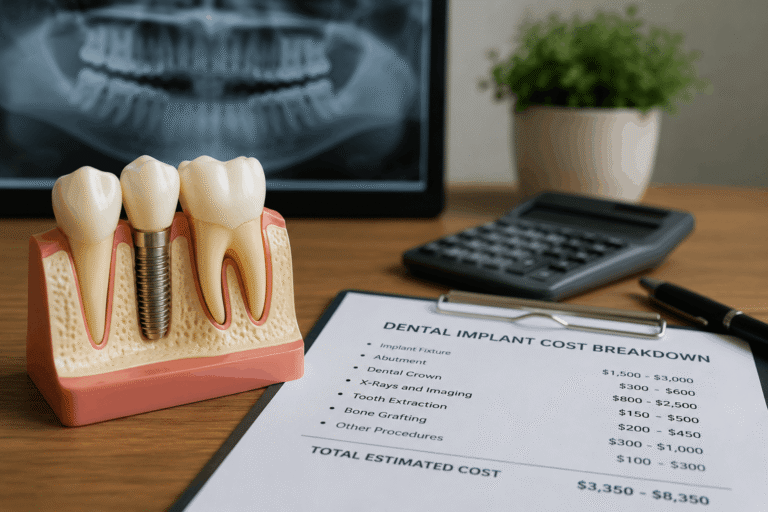
- Complete a dental implant restoration by covering the implant abutment.
A crown does not make a tooth indestructible. The natural tooth underneath and the surrounding gums still need regular care.
A crown can also chip, loosen, or wear over time, so routine dental examinations remain important.
When Might You Need a Dental Cap or Crown?
A crown is not necessary for every cavity or small chip. Your dentist considers how much healthy tooth structure remains, where the damage is located, your bite, and whether the tooth can be restored predictably.
Here are some situations where a crown may be recommended.
1. A Tooth Has a Large Cavity
If decay has removed a substantial amount of tooth structure, a filling alone may not provide enough support. A crown may cover and protect the remaining tooth, reducing the risk of further damage.
2. A Tooth Is Cracked or Broken
A crown may help hold the remaining parts of a damaged tooth together and restore its function. However, the right treatment depends on the crack’s location and depth. Some fractures extend below the gum line and may not be suitable for a crown.
3. You Have Had Root Canal Treatment
Some root canal-treated teeth need a crown because they have lost significant structure or are at greater risk of fracture. Not every tooth automatically requires the same restoration. Your dentist will assess the remaining tooth structure and its position before recommending treatment.
4. A Tooth Is Severely Worn
Grinding, clenching, or long-term wear can reduce tooth structure. A crown may be one option if the damage affects the tooth’s strength or chewing function.
5. A Tooth Needs a More Complete Cosmetic Restoration
A crown can change the shape or colour of a tooth when there is also a structural reason for full coverage. If your concern is purely cosmetic, less invasive options may be more appropriate.
Pain is not the only sign that a tooth needs attention. A crack or large cavity may be found during an examination before it causes obvious symptoms.
Arrange an assessment if you notice pain when chewing, persistent sensitivity, a broken filling, a visible crack, or a change in how your teeth meet.
What Materials Are Dental Crowns Made From?
The best crown material depends on the tooth’s location, bite pressure, appearance goals, available tooth structure, and your dentist’s recommendation.
Common options include:
- All-ceramic or porcelain: These tooth-coloured options can provide a natural appearance. They are often considered for visible teeth, although strength varies by material and design.
- Zirconia: A strong ceramic option that can be used in different areas of the mouth. The specific type and design affect its appearance and performance.
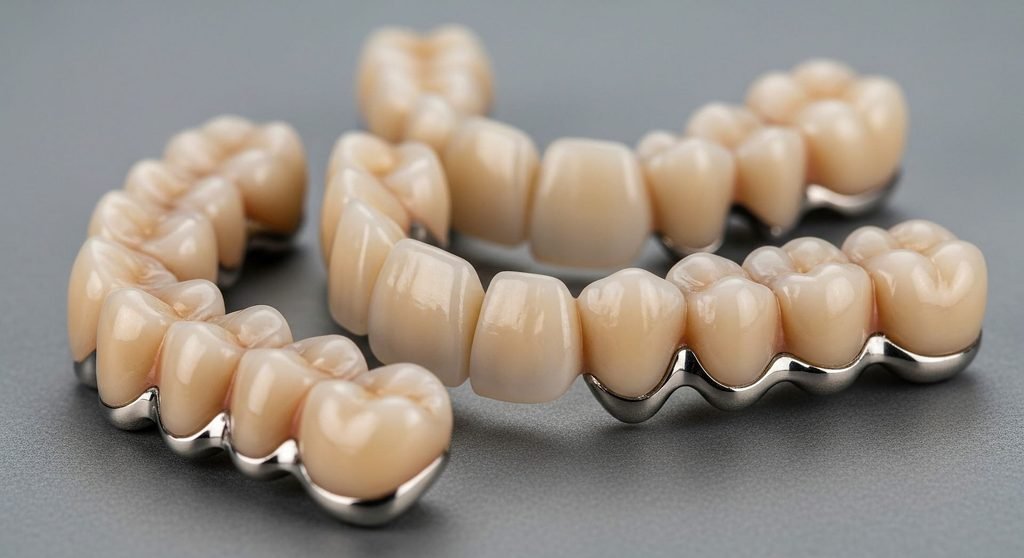
- Porcelain-fused-to-metal: This combines a metal base with a tooth-coloured outer layer. It offers strength, although the porcelain can chip and a metal edge may become visible if the gums recede.
- Metal alloys: These are often durable and useful for back teeth where chewing forces are high. Their metallic appearance may make them less suitable when appearance is a priority.
There is no single best crown material for everyone. Ask your dentist why a particular option suits your tooth and whether it has any limitations.
What Happens During a Dental Crown Procedure?
Traditional dental crown treatment commonly involves two appointments, although some dental offices may offer same-day crowns using in-office technology.
First appointment: Tooth preparation
Your dentist examines the tooth and may take X-rays or digital images. The area is numbed, decay or damaged material is removed, and the tooth is shaped so the crown can fit over it.
An impression or digital scan is then taken to create your custom crown. A temporary crown may be placed to protect the prepared tooth while the permanent one is being made.
Second appointment: Permanent crown placement
At the next visit, your dentist checks the permanent crown’s fit, shape, colour, and bite. If everything is suitable, the crown is cemented or bonded into place.
Your dentist makes any necessary bite adjustments and provides care instructions. Some sensitivity or mild gum tenderness can occur after treatment.
Contact your dental office if pain is severe, your bite feels uneven, the crown feels loose, or symptoms persist or worsen.
Is a Crown Always Better Than a Filling?
No. A filling is usually more conservative when decay or damage is limited. It repairs the affected area while preserving more natural tooth structure.
For damage that is too extensive for a filling but does not require full coverage, an inlay or onlay may be an option. An onlay can cover one or more chewing cusps without covering the entire tooth.
Your dentist will compare the amount of remaining healthy tooth structure, the tooth’s position, and your bite before recommending a restoration.
A crown involves reshaping the tooth, so it should be recommended for a clear clinical reason—not simply because it is a more extensive treatment.
- For more information, explore White Tooth Dental’s restorative dentistry services.
How Long Does a Dental Crown Last?
There is no guaranteed lifespan for a dental crown. Its longevity depends on the material, fit, bite forces, oral hygiene, diet, and habits such as teeth grinding or chewing ice.
Many crowns last for years, but they may eventually need repair or replacement. Regular care can help protect both the crown and the natural tooth underneath.
To maintain your restoration:
- Brush twice daily with fluoride toothpaste.
- Clean between your teeth every day.
- Attend regular dental checkups.
- Avoid chewing ice or very hard objects.
- Do not use your teeth to open packages.
- Ask your dentist whether a night guard may help if you grind or clench your teeth.
If a crown becomes loose, cracks, or falls off, contact your dentist promptly. Keep the crown if it comes off, and never try to reattach it with household glue.
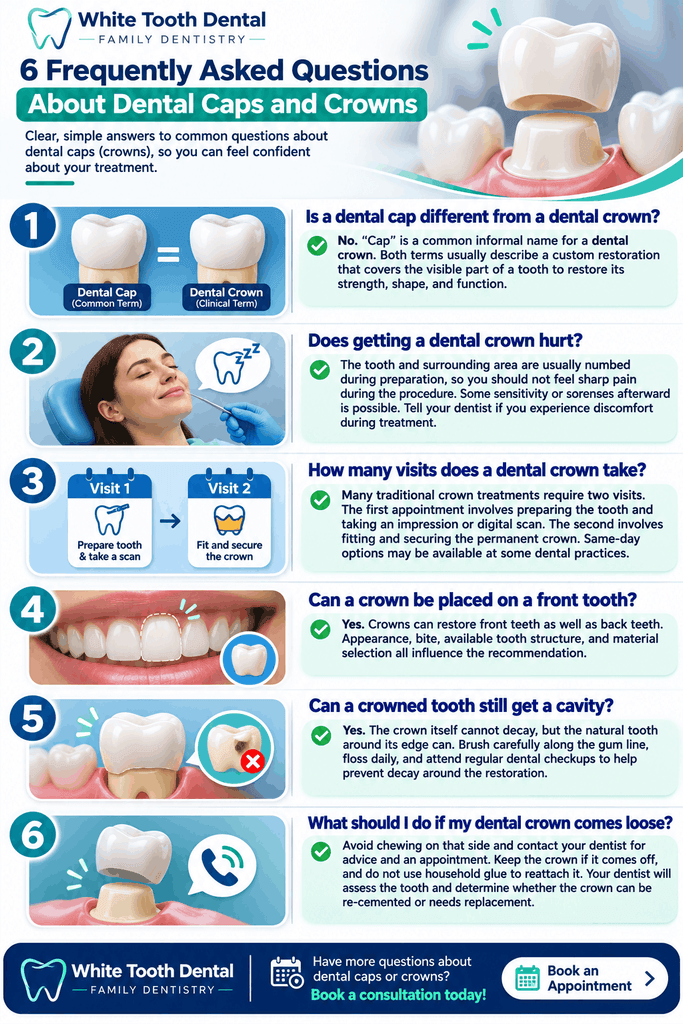
6 Frequently Asked Questions About Dental Caps and Crowns
1. Is a dental cap different from a dental crown?
No. “Cap” is a common informal name for a dental crown. Both terms usually describe a custom restoration that covers the visible part of a tooth to restore its strength, shape, and function.
2. Does getting a dental crown hurt?
The tooth and surrounding area are usually numbed during preparation, so you should not feel sharp pain during the procedure. Some sensitivity or soreness afterward is possible. Tell your dentist if you experience discomfort during treatment.
3. How many visits does a dental crown take?
Many traditional crown treatments require two visits. The first appointment involves preparing the tooth and taking an impression or digital scan. The second involves fitting and securing the permanent crown. Same-day options may be available at some dental practices.
4. Can a crown be placed on a front tooth?
Yes. Crowns can restore front teeth as well as back teeth. Appearance, bite, available tooth structure, and material selection all influence the recommendation.
5. Can a crowned tooth still get a cavity?
Yes. The crown itself cannot decay, but the natural tooth around its edge can. Brush carefully along the gum line, floss daily, and attend regular dental checkups to help prevent decay around the restoration.
6. What should I do if my dental crown comes loose?
Avoid chewing on that side and contact your dentist for advice and an appointment. Keep the crown if it comes off, and do not use household glue to reattach it. Your dentist will assess the tooth and determine whether the crown can be re-cemented or needs replacement.
Talk to a Dentist in Bloor West Village About Your Options
A dental cap and a dental crown are generally two names for the same treatment.
Whether you need one depends on the amount of healthy tooth structure remaining, the location and extent of damage, and your overall oral health. A filling, inlay, onlay, or another option may be more appropriate in some cases.
If you have a cracked tooth, a large filling, persistent sensitivity, or have been advised to consider a crown, arrange an examination before the problem gets worse.
White Tooth Dental Family Dentistry provides restorative dental care, including dental crowns, for patients in Bloor West Village and nearby west Toronto communities.
Book a consultation with White Tooth Dental Family Dentistry to have your tooth assessed, understand your treatment options, and choose a restoration that supports your comfort, function, and long-term oral health.