

What if the crown your dentist recommends costs $1,000 at one clinic but much more somewhere else?
That difference can be confusing. You may wonder whether you are paying for a better crown, a different material, extra dental work, or simply a higher lab fee.
The truth is that dental crown cost in Canada is not one fixed number. The final price depends on the crown material, the tooth being treated, how much preparation is needed, and the dental laboratory involved.
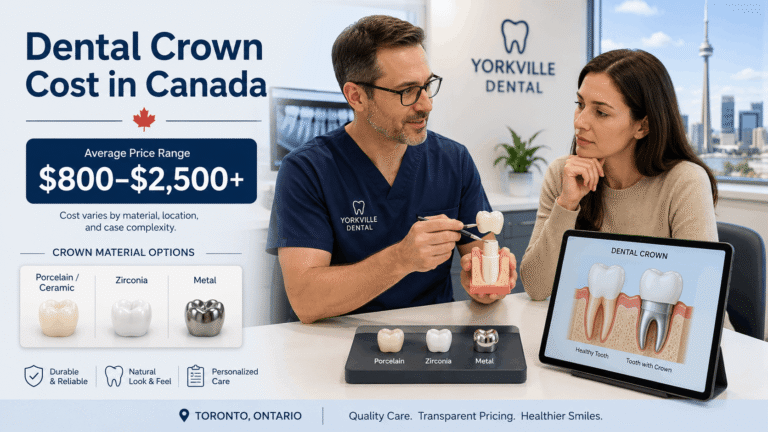
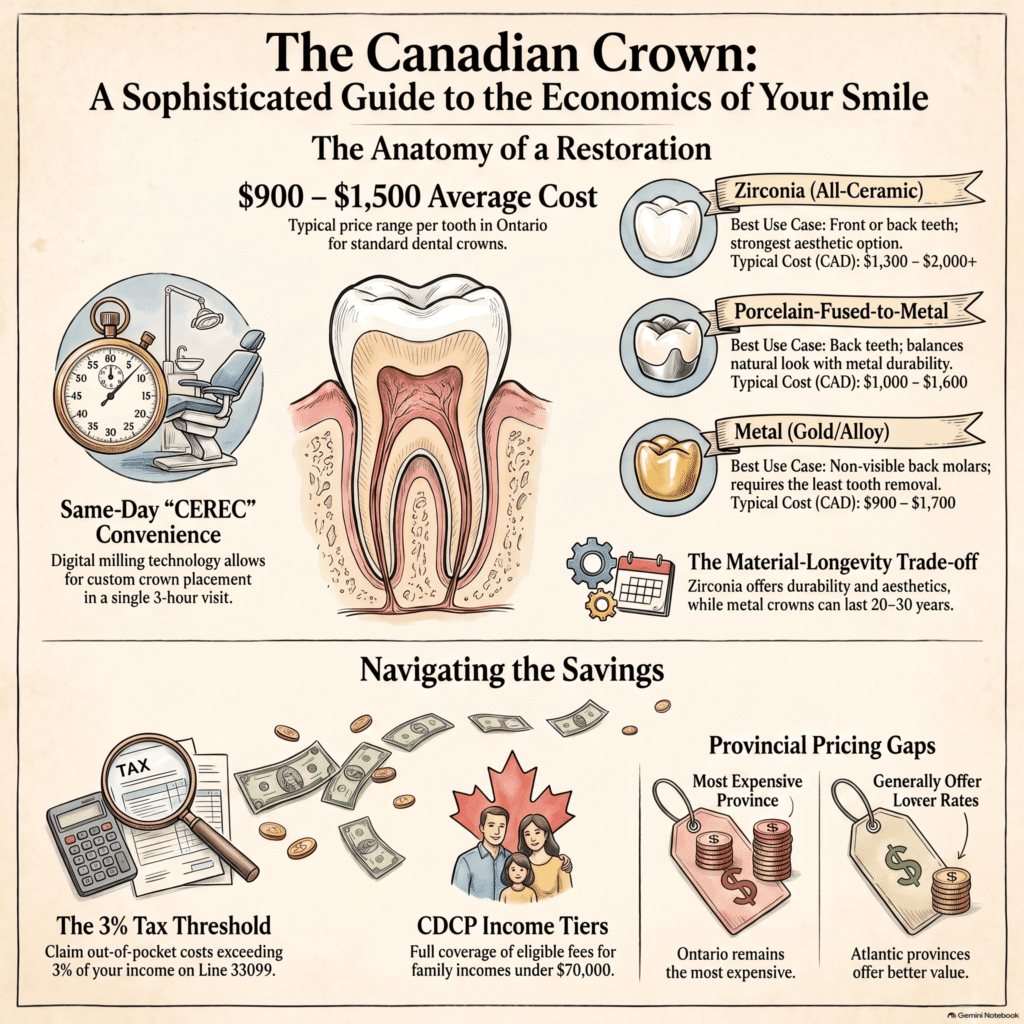
Current Canadian dental sources commonly place crowns somewhere between about $800 and $2,500 per tooth, although complicated cases may reach $3,000 or more. One Canadian insurer reports an average range of about $900 to $1,500.
That is a wide range.
So, what are you actually paying for?
Here is what patients in Toronto should know before choosing a crown.
What Is a Dental Crown?
A dental crown is a protective cap placed over a damaged or weakened tooth.
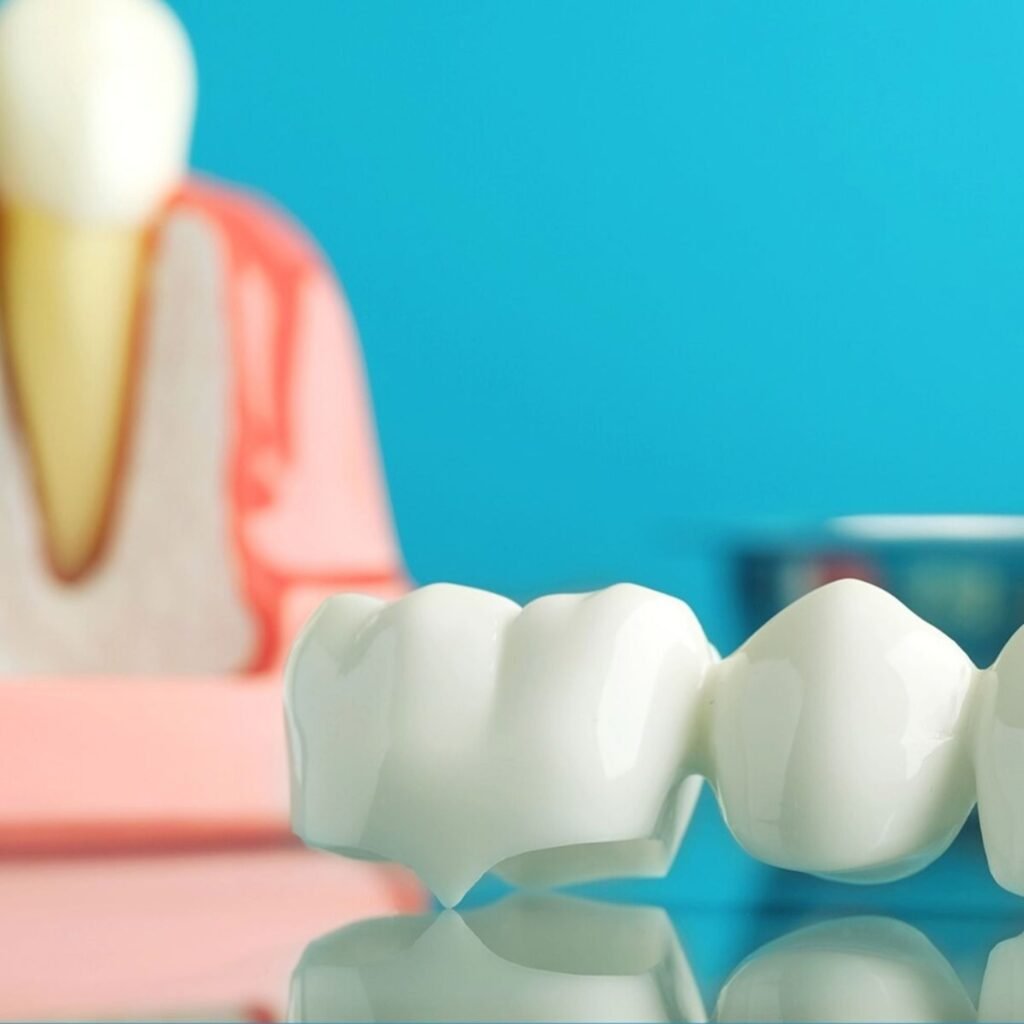
It restores the tooth’s shape and helps it handle normal biting forces again.
A dentist may recommend a crown when a tooth:
- Has a very large filling
- Has cracked or broken
- Has become badly worn
- Has undergone root canal treatment
- Needs to support part of a dental bridge
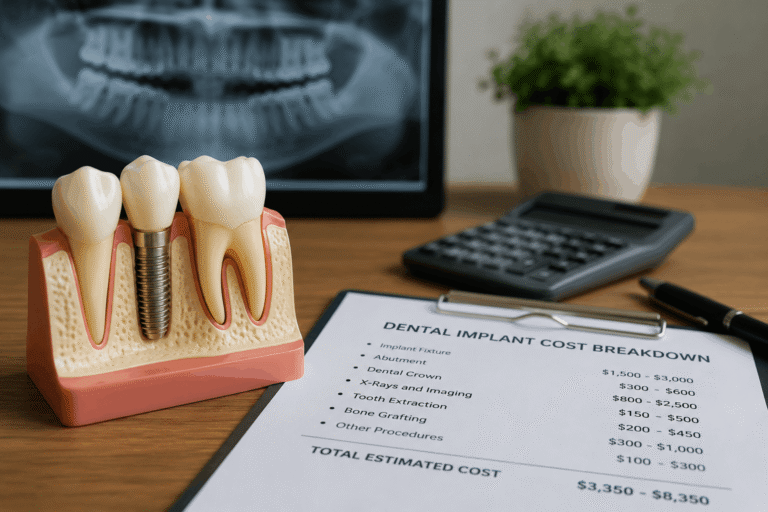
- Needs restoration over a dental implant
Crowns can be made from porcelain, ceramic, zirconia, metal, or a combination of materials.
The material you choose is one of the biggest factors affecting price.
How Much Does a Dental Crown Cost in Canada?
There is no single Canada-wide crown fee.
Recent Canadian articles appearing prominently for crown-cost searches provide ranges from about $800 to $2,500 per crown, while another Canadian dental provider lists an overall range of roughly $1,100 to $3,000, depending on the materials and condition of the tooth.
Canada Life gives a narrower national average of approximately $900 to $1,500. It also notes that laboratory fees and treatments such as a root canal or dental post may be charged separately.
These numbers should only be used as general estimates.
Your actual dental crown cost in Toronto can only be determined after the tooth is examined.
Dental Crown Cost by Material
The material is one of the first choices your dentist will discuss with you.
Different materials offer different combinations of strength, appearance, and longevity.
Porcelain or Ceramic Crowns: About $1,000–$2,500
Porcelain and ceramic crowns are popular because they can closely match natural tooth colour.
They are often considered for teeth that show when you smile.
Canadian pricing guides published by dental clinics commonly place porcelain or ceramic crowns at roughly $1,000 to $2,500 per tooth.
The exact cost can depend on the ceramic used and the complexity of the laboratory work.
Porcelain-Fused-to-Metal Crowns: About $800–$2,000
A porcelain-fused-to-metal crown, or PFM crown, has a metal structure covered by tooth-coloured porcelain.
The metal adds strength.
The porcelain improves the appearance.
One current Canadian pricing guide places PFM crowns at roughly $800 to $2,000 per tooth.
They may be considered for both front and back teeth depending on the case.
Zirconia Crowns: About $1,200–$2,500
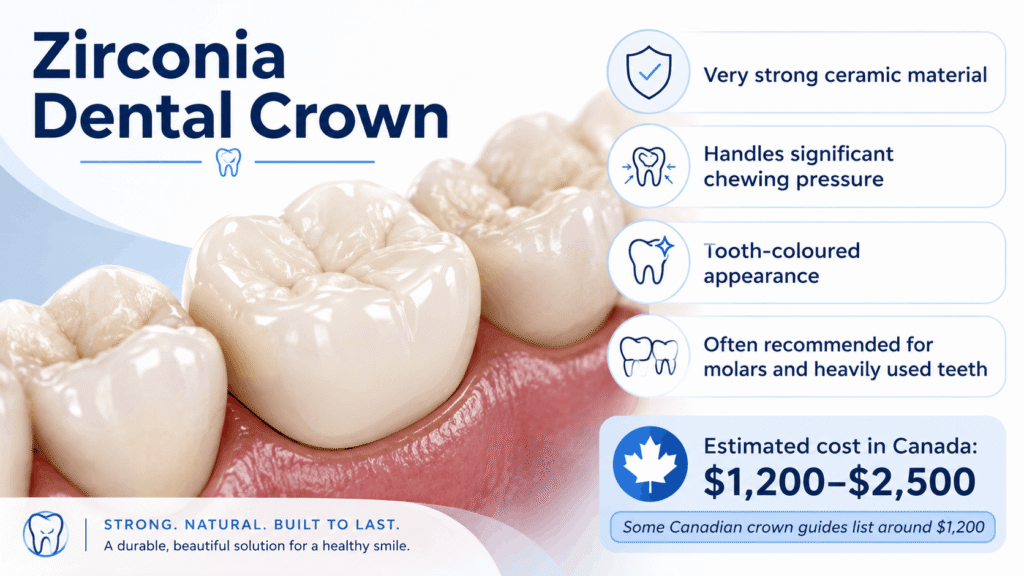
Zirconia is a very strong ceramic material.
It can handle significant chewing pressure while still providing a tooth-coloured appearance.
For that reason, dentists may recommend zirconia for molars and other heavily used teeth.
Published Canadian estimates place zirconia crowns at around $1,200 to $2,500, although another Canadian dental provider lists a figure of approximately $1,200 in its crown guide.
Metal or Gold Crowns: About $900–$2,500
Metal crowns are known for their strength.
They may be useful for back teeth where appearance is less important.
Published estimates vary widely because the price can depend on the type and quantity of metal used. One Canadian source places metal crowns at approximately $900 to $2,500.
Gold and precious-metal prices can also influence laboratory costs.
Why Does the Tooth Being Crowned Change the Price?
A crown on a front tooth may not require the same planning as a crown on a back molar.
Front teeth are highly visible.
This means colour, shape, translucency, and symmetry may receive extra attention.
A dental laboratory may need more detailed shade matching to make the crown blend naturally with nearby teeth.
Molars face another challenge.
They experience strong chewing forces. The dentist may recommend a stronger material such as zirconia or metal.
The condition of the tooth matters too.
A relatively healthy tooth that simply needs coverage may involve less treatment than a badly broken tooth.
The Hidden Cost Factor: Preparing the Tooth
The crown itself may not be the only expense.
Before a crown can be placed, the tooth must be healthy and strong enough to support it.
Some patients may need:
- A large filling or core buildup
- Treatment for decay
- A dental post
- Root canal treatment
- Gum treatment
- Additional X-rays or imaging
Canada Life specifically notes that quoted crown fees may not include laboratory charges or additional treatments such as root canal therapy or placement of a metal post.
This explains why two people receiving similar-looking crowns can have very different bills.
How Much Do Dental Lab Fees Affect Crown Cost?
More than many patients realize.
Traditional crowns often involve a dental laboratory.
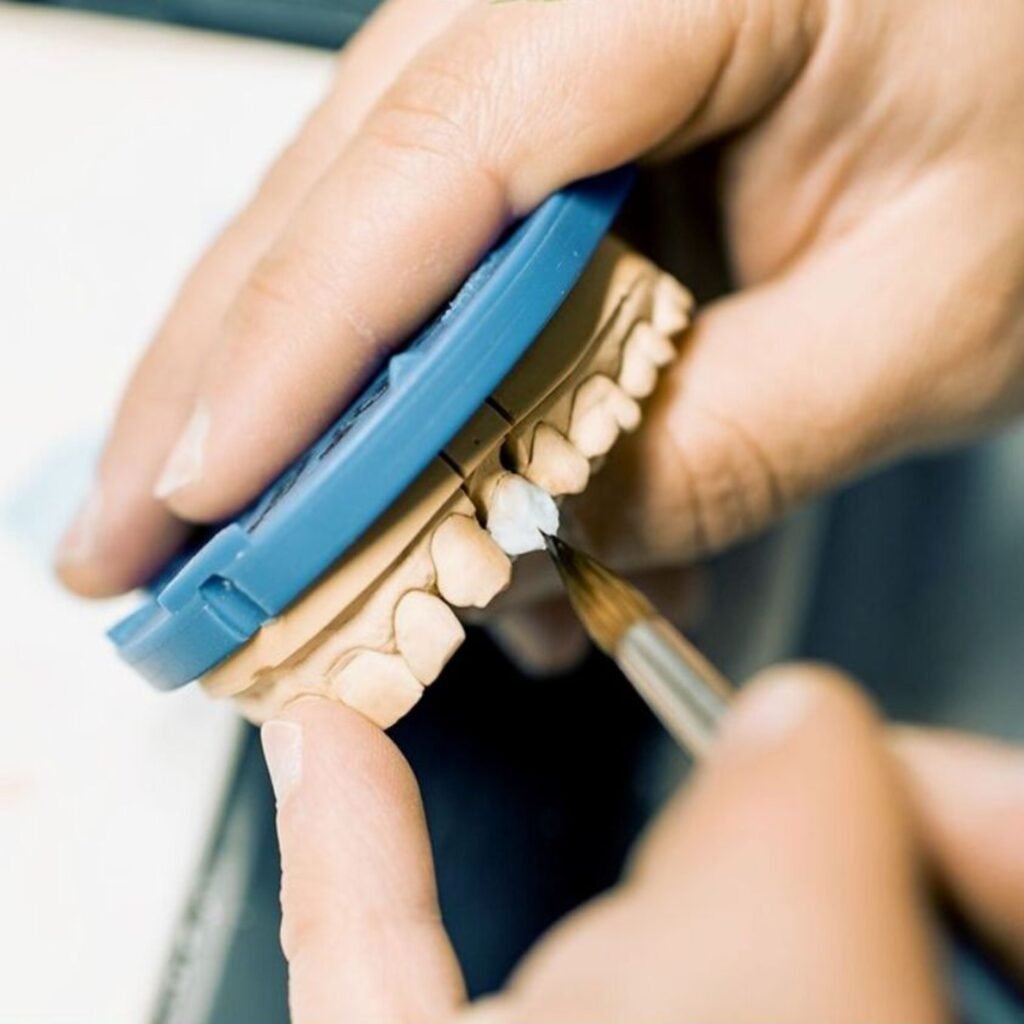
Your dentist prepares the tooth and records its shape. The information is sent to the lab, where technicians create the restoration.
The technician may need to reproduce tiny details.
The crown needs to fit against neighbouring teeth. It needs the correct bite. For visible teeth, it also needs the right colour and translucency.
Higher-complexity laboratory work can therefore increase the total cost.
Canadian crown pricing information also identifies lab costs as one of the variables that can affect what a patient ultimately pays.
Does Dental Insurance Cover Crowns in Canada?
It can.
Many workplace or private dental plans provide some coverage for crowns when they are considered necessary restorative treatment.
However, every plan is different.
Canada Life recommends checking whether your policy includes major dental coverage and submitting an estimate to your insurer before treatment when possible.
Patients should check:
- The percentage their plan pays
- Their annual maximum
- Deductibles
- Frequency limits for replacement crowns
- Whether laboratory fees are covered
- How much of their yearly benefits have already been used
Do not assume your plan’s orthodontic insurance coverage also determines crown coverage.
Orthodontic benefits usually relate to treatments such as braces or aligners. Crowns usually fall under restorative or major dental services. Your coverage limits may therefore be completely different.
Ask your insurer or dental office for a predetermination when possible.
People Also Ask About Dental Crown Cost
How much does one dental crown cost in Canada?
Current Canadian sources generally show a broad range of around $800 to $2,500 per tooth, with some cases reaching approximately $3,000 depending on the material and additional treatment required.
The only way to know your actual cost is to have the tooth examined.
Why are dental crowns so expensive?
A crown is custom-made for your tooth.
The fee can include tooth preparation, impressions or digital scans, temporary restoration, specialized materials, laboratory work, fitting, bite adjustments, and final placement.
Extra procedures may also raise the total.
Does getting a crown always mean I need a root canal?
No.
A root canal is not automatically required before a crown.
If the nerve inside the tooth is healthy, a crown may be placed without root canal treatment. However, a tooth with deep decay or an infected pulp may need root canal therapy first.
How long does a dental crown last?
There is no guaranteed lifespan.
How long a crown lasts depends on its material, bite forces, oral hygiene, diet, grinding habits, and the health of the supporting tooth.
Canada Life notes that a crown can last up to approximately 15 years with proper care, while longevity can vary from patient to patient.
Which dental crown is best?
There is no material that is best for everyone.
A front tooth may need excellent aesthetics.
A molar may require greater strength.
Someone who grinds their teeth may have different needs again.
A dentist in Toronto should evaluate your tooth, bite, appearance goals, and remaining tooth structure before recommending a material.
Is the most expensive crown always the best?
No.
Paying more does not automatically mean the crown is better for your particular tooth.
The goal is to choose a material that provides the right balance of strength, appearance, fit, and long-term protection.
How Can You Get an Accurate Crown Price Before Treatment?
Start with a dental examination.
Ask for a written treatment estimate that explains what is included. You can also ask:
What material will be used?
Find out why that material is being recommended.
Are laboratory fees included?
This can prevent surprises later.
Will I need a buildup, post, or root canal?
These procedures may increase the final bill.
Can you submit an estimate to my insurance company?
A predetermination can help you understand what your plan may pay before treatment begins.
Most importantly, do not choose a crown based only on the lowest advertised price.
A properly fitted crown needs to protect your tooth, function comfortably, and work with your bite.
Know the Cost Before You Commit
The dental crown cost in Canada can vary widely because every tooth is different. Material choice matters. Tooth location matters. Lab work matters. The amount of damage underneath the crown matters too.
That is why an online price should be treated as a starting point rather than a final quote.
If you have a cracked, heavily filled, worn, or root-canal-treated tooth, White Tooth Dental & Family Dentistry can help you understand your options. Book a consultation with a dentist in Bloor West Village to have the tooth examined and receive a treatment plan based on your actual dental needs, rather than a generic price estimate.