


A toothache can turn a quiet night into a stressful one. The pain may throb, spread into your jaw, or wake you every time you fall asleep. You may grab your phone and search “dental ER near me,” but the results can make the next step feel confusing.
Should you wait until morning? Call an emergency dental clinic? Or go to a hospital?
The answer depends on your symptoms. Keep reading to learn what to do first, which warning signs cannot wait, and how to protect your tooth until a dentist can see you.
Is Nighttime Tooth Pain a Dental Emergency?

Not every toothache requires a hospital visit. However, severe pain should not be ignored.
Call an emergency dentist when the pain is strong, constant, getting worse, or stopping you from sleeping.
You should also seek urgent dental care for facial swelling, a broken tooth, a knocked-out tooth, uncontrolled bleeding, or a lost filling or crown that causes serious pain.
Go to a hospital emergency department or call 911 when you have trouble breathing or swallowing, swelling near the eye or neck, serious facial trauma, a possible broken jaw, or bleeding that will not stop.
These symptoms may involve risks beyond the tooth itself.
What to Do in the First 15 Minutes
Try to stay calm. Then take these steps:
- Rinse your mouth gently with warm water.
- Floss carefully in case food is trapped.
- Check your gums, cheek, jaw, neck, and eye area for swelling.
- Place a cold compress against the outside of your cheek.
- Call a dental office and listen for after-hours instructions.
- Note when the pain started and whether you have fever, bleeding, swelling, or an injury.
Over-the-counter pain medicine may provide temporary relief when it is safe for you.
Follow the package directions. Ask a pharmacist or healthcare professional when unsure.
Never place aspirin or another pain tablet directly against the tooth or gum. It may damage the tissue.
Dentist or Hospital: Which One Do You Need?
A dentist treats the cause of most tooth problems. This may include decay, a cracked tooth, an infected nerve, a damaged filling, or a dental abscess.
A hospital is the better choice when the problem affects breathing, swallowing, facial bones, or your general health. Hospital staff may help control pain, swelling, or infection risk until dental care becomes available.
However, emergency departments do not usually provide fillings, crowns, or root canal treatment. You will often still need to visit a dentist afterward.
Use this quick guide:
- Tooth problem without dangerous medical symptoms: Call an emergency dental clinic.
- Breathing, swallowing, eye, neck, severe trauma, or uncontrolled bleeding problem: Go to the hospital or call 911.
Why You Should Not Ignore the Pain
Pain medicine may reduce discomfort for a few hours. However, it does not repair a cavity, crack, infected nerve, or abscess.
Swelling needs special attention because an infection may spread beyond the original tooth. Prompt dental care may prevent the problem from becoming harder to treat.
What If a Tooth Is Knocked Out?
A knocked-out adult tooth needs fast attention.
Pick up the tooth by the crown. This is the white part that you normally see. Do not hold it by the root.
Rinse it gently if it is dirty. Do not scrub it or remove any attached tissue.
Place the tooth back into its socket without forcing it when possible. Otherwise, keep it moist in milk and contact a dentist immediately. Fast treatment gives the dentist a better chance of saving the tooth.
Do not place a knocked-out baby tooth back into its socket. Call a dental professional for instructions instead.
Mistakes to Avoid at Night
- Do not put aspirin directly on the gum.
- Do not use super glue on a crown, filling, or broken tooth.
- Do not poke the painful area with a needle, toothpick, or sharp tool.
- Do not take more medicine than the package label allows.
- Avoid very hot, cold, sweet, or hard foods. Try to chew on the other side of your mouth.
Most importantly, do not ignore swelling that is growing or moving toward your eye, jaw, or neck.
People Also Ask About After-Hours Dental Care
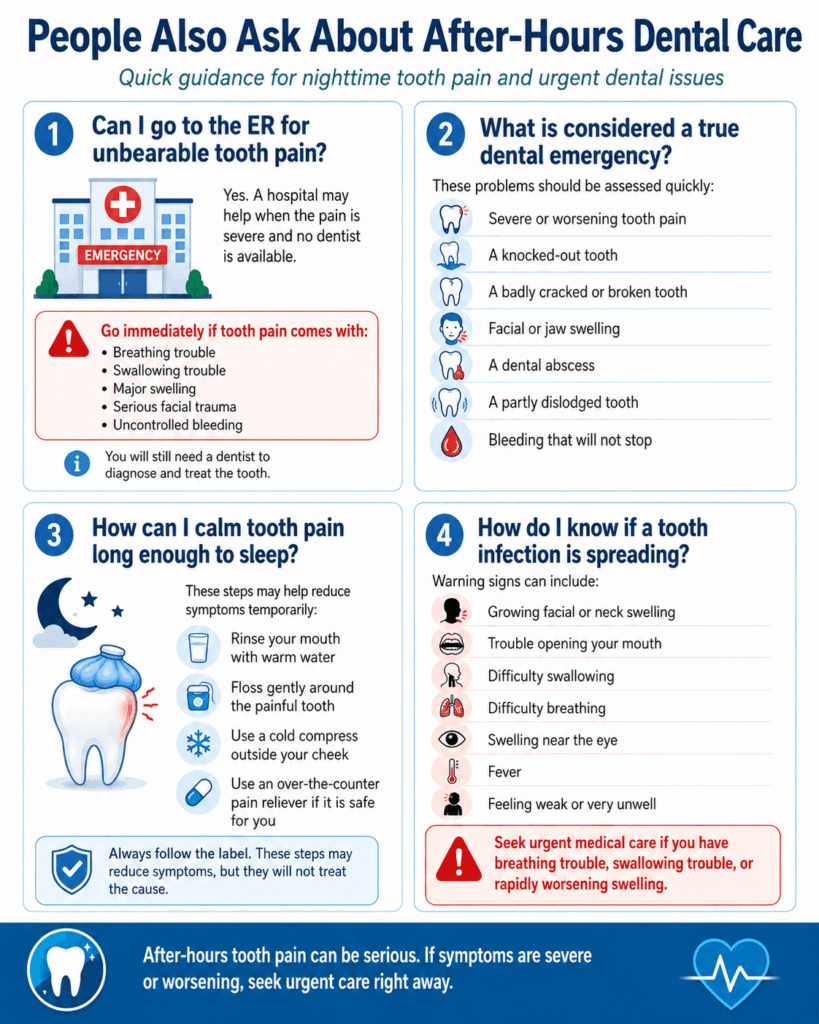
Can I go to the ER for unbearable tooth pain?
Yes. A hospital may help when the pain is severe and no dentist is available.
Go immediately when tooth pain comes with breathing trouble, swallowing trouble, major swelling, serious facial trauma, or uncontrolled bleeding. You will still need a dentist to diagnose and treat the tooth.
What is considered a true dental emergency?
Examples include:
- Severe or worsening tooth pain
- A knocked-out tooth
- A badly cracked or broken tooth
- Facial or jaw swelling
- A dental abscess
- A partly dislodged tooth
- Bleeding that will not stop
These problems should be assessed quickly.
How can I calm tooth pain long enough to sleep?
Rinse your mouth with warm water. Floss gently around the painful tooth. Use a cold compress outside your cheek.
You may use an over-the-counter pain reliever when it is safe for you. Always follow the label. These steps may reduce the symptoms, but they will not treat the cause.
How do I know if a tooth infection is spreading?
Warning signs can include:
- Growing facial or neck swelling
- Trouble opening your mouth
- Difficulty swallowing
- Difficulty breathing
- Swelling near the eye
- Fever
- Feeling weak or very unwell
Seek urgent medical care when breathing, swallowing, the eye area, or the neck is affected.
Finding Emergency Dental Care in Bloor West Village
People often search “dental ER near me” because they need clear help, not a long list of clinic names.
Choose a nearby practice that explains its after-hours process and provides urgent diagnosis and treatment.
Some people may accidentally type “emergency dental in blood west village” while searching on their phones. The correct Toronto neighbourhood name is Bloor West Village.
White Tooth Dental Family Dentistry provides emergency dental care for concerns such as tooth pain, broken teeth, swelling, lost fillings, and dental infections.
The clinic is located at 2425 Bloor Street West, Suite 312, Toronto. Its website also provides an after-hours support number for patients who need urgent guidance.
What Happens at an Emergency Dental Clinic?
The dentist will ask when the pain started and whether anything triggered it. They may also ask about swelling, sensitivity, injuries, recent treatments, and your medical history.
The dentist will examine the tooth, gums, face, and jaw. Dental X-rays may help reveal decay, infection, bone changes, or a fracture.
Treatment depends on the cause. It may include:
- A temporary repair
- A dental filling
- Crown repair
- Draining an infection
- Root canal treatment
- Tooth extraction
- Treatment for damaged gums or soft tissue
The first goal is to control the urgent problem. A follow-up appointment may be needed to complete the final repair.
For additional evidence-based information, review the American Dental Association’s or ADA acute dental pain management guideline. It provides professional and patient resources about toothaches and short-term dental pain.
Frequently Asked Questions
Can a mild toothache wait until morning?
A mild ache without swelling, fever, trauma, or heavy bleeding may be able to wait until regular office hours. Call sooner if the pain becomes strong, constant, or difficult to control.
Is facial swelling always a dental emergency?
Facial swelling may signal an infection. Contact a dentist urgently. Go to a hospital when the swelling affects breathing, swallowing, the eye, or the neck.
Can an emergency dentist save a broken tooth?
Often, yes. The treatment depends on the depth and location of the damage. Save any broken pieces, rinse your mouth, use a cold compress, and seek care quickly.
Can a new patient visit an emergency dental clinic?
Many clinics accept new emergency patients, but availability can vary. Call before travelling so the dental team can understand your symptoms and explain the next step.
What should I tell the after-hours dental line?
Explain where the pain is and when it started. Describe how severe it feels.
Tell the team whether you have swelling, fever, bleeding, trauma, or a broken tooth. Also mention any medicine you took and when you took it.
Do Not Spend the Night Guessing
Nighttime tooth pain can feel frightening. However, having a clear plan makes the next step easier.
Call a dental professional when pain is severe, persistent, or connected to swelling or tooth damage. Go to the hospital when breathing, swallowing, major trauma, or uncontrolled bleeding is involved.
When you need an emergency dental clinic or a dentist in Bloor West Village, Toronto, contact White Tooth Dental Family Dentistry. The team can listen to your symptoms, explain the appropriate next step, and arrange an appointment when dental care is needed.
Booking your appointment early may help protect your natural tooth and restore your comfort.