


You notice it in the mirror one day.
Not a huge change. Just enough to make you pause and think, “Why do my teeth look more yellow than they used to?”
If that sounds familiar, you are not alone. Yellow teeth are one of the most common smile concerns people have. The good news is that this does not always mean something is seriously wrong.
In many cases, the cause is something simple and fixable. In other cases, the colour change may be a sign that something deeper is going on inside the tooth.
That is why it helps to know the difference.
In this guide, you will learn what causes yellow teeth, what you may be able to improve on your own, when professional treatment makes sense, and when the issue may be more than just stains.
Are Yellow Teeth Always a Problem?
Not at all.
A lot of people assume healthy teeth are supposed to be bright white, but that is not really true. Natural teeth often have a slightly off-white, ivory, or warm tone. For some people, the natural yellow colour of teeth is simply part of their genetics and tooth structure.
Teeth can also become more yellow over time as enamel gets thinner. Since enamel is the white outer layer and dentin underneath is naturally more yellow, the teeth may start to look darker even when they are still healthy.
So yes, yellow in teeth can sometimes be completely normal.
But sometimes the discoloration is trying to tell you something.
What Causes Yellow Teeth?
There is no single answer. Usually, yellow teeth happen because of one or more of the causes below.
Surface Stains from Food and Drinks
This is one of the most common reasons teeth start looking yellow.
Coffee, tea, red wine, curry, cola, soy sauce, and deeply pigmented foods can stain the enamel over time. If you enjoy these regularly, stains can slowly build up and make your smile look darker than it used to.
This kind of staining is often one of the easiest issues to improve.
Smoking and Tobacco Use
Tobacco is another major cause of yellow teeth.
Nicotine and tar can cling to the surface of the teeth and create stubborn yellow or brown stains. At first, the change may look mild. Over time, it can become more noticeable and much harder to remove with regular brushing alone.
Plaque and Tartar Buildup
Sometimes your tooth is not actually changing colour. What is sitting on it is.
Plaque buildup can make teeth look dull and less clean. When plaque hardens into tartar, it can leave behind yellow or darker deposits that brushing cannot remove at home.
In these cases, a professional cleaning may make a much bigger difference than another whitening toothpaste.
Aging and Enamel Thinning
This is a very common cause that many people do not think about.
As you get older, the enamel on your teeth naturally wears down. When that happens, more of the yellow dentin underneath starts to show through. This means the yellow colour of teeth can become more obvious with age, even if you brush and floss consistently.
Poor Oral Hygiene
If brushing and flossing are inconsistent, stain-causing substances stay on the teeth longer. Plaque builds up faster. Tartar forms more easily. And the teeth gradually start to look more yellow.
This is one of the most fixable causes, but only if you stay consistent.
Genetics
Some people simply have naturally darker or more yellow-looking teeth than others.
That does not mean their teeth are unhealthy. It just means their enamel may be thinner, or their dentin may naturally show through more. This is why comparing your smile to someone else’s ultra-white smile is not always useful.
Enamel Erosion
Acidic foods and drinks, acid reflux, frequent vomiting, and other causes of acid exposure can wear away enamel. When enamel thins out, teeth can begin to look more yellow.
This is important because in these situations, the issue is not only colour. It may also involve sensitivity and a higher risk of decay.
Tooth Injury or Internal Tooth Damage
This is where it starts becoming more than a cosmetic issue.
If one tooth changes colour by itself, especially if it becomes darker yellow, brown, or grey, the cause may be internal. Trauma to the tooth or damage to the nerve can change the tooth’s appearance from the inside out.
That kind of discoloration is different from normal staining and may require professional treatment.
Causes of Yellow Teeth You Can Usually Fix
Now let’s get practical.
Some causes of yellow teeth are very manageable. In many cases, simple changes can improve the look of your teeth noticeably.
Common Fixable Causes
You may be able to improve yellow teeth if the cause is:
- coffee or tea stains
- tobacco use
- plaque buildup
- tartar from missed cleanings
- inconsistent brushing and flossing
- surface staining from foods and drinks
These are usually external causes, which means the discoloration is sitting on the surface of the teeth rather than happening deep inside them.
What You Can Do at Home
Here are some simple habits that can help:
- brush twice a day with fluoride toothpaste
- floss once a day
- rinse with water after dark drinks
- reduce smoking or tobacco use
- avoid sipping coffee or tea for long periods
- keep up with regular dental cleanings
Whitening toothpastes can also help in some cases, especially when the issue is surface stain. But they usually do not change the deeper natural shade of your teeth.
When Teeth Whitening May Help
If your teeth look evenly yellow across your smile and the cause appears to be staining, whitening may help.
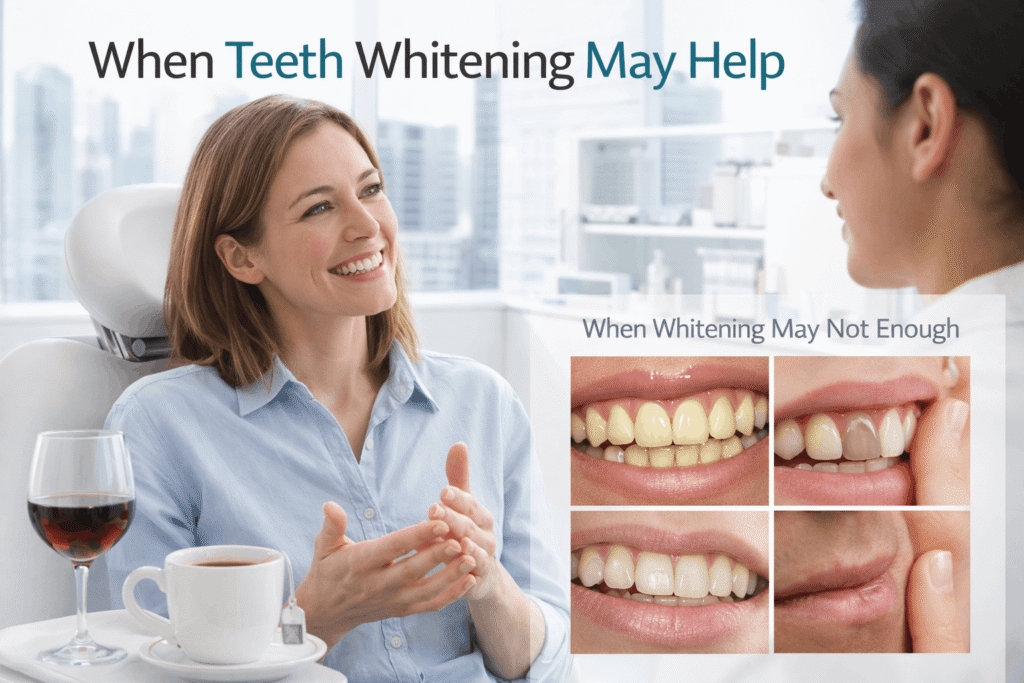
This is where teeth whitening in Toronto can be a good option for someone who wants a brighter smile with more noticeable results than over-the-counter products often provide.
Signs You May Be a Good Candidate for Whitening
Whitening may make sense if:
- most of your teeth are evenly discolored
- you drink coffee, tea, or red wine regularly
- your teeth are generally healthy
- your dentist has ruled out decay or nerve problems
- you want to brighten your smile safely and predictably
Professional whitening tends to be more controlled than at-home products. It can also be adjusted based on your level of sensitivity and your cosmetic goals.
When Whitening Is Probably Not the First Answer
Whitening may not be the right starting point if:
- one tooth is darker than the others
- you have pain or sensitivity in one tooth
- your gums are swollen
- the discoloration appeared suddenly
- the problem might be internal rather than surface-level
This is where you want an exam first before trying to bleach the colour away.
When Yellow Teeth Are More Than Stains
This is the part that really matters.
Sometimes yellow teeth are just cosmetic. Other times they are a clue that your tooth needs treatment.
One Tooth Looks Different from the Rest
If one tooth has changed colour while the others look normal, take that seriously.
That type of discoloration may point to injury, infection, internal bleeding in the tooth, or damage to the pulp. It is not the same thing as general staining.
You Also Have Pain or Sensitivity
If the colour change comes with pain while chewing, lingering hot or cold sensitivity, or throbbing discomfort, it may mean the tooth is inflamed or infected.
That needs professional evaluation.
There Is Swelling or a Bad Taste
Swelling around the tooth or gum, or a persistent bad taste in your mouth, can be signs of infection. That goes beyond cosmetic staining and should be checked promptly.
Whitening Does Not Help That Tooth
If the rest of your smile responds to whitening but one tooth still looks dark or yellow, that can be another clue that the problem is internal.
In cases like that, the solution may not be whitening at all. A dentist may need to assess whether the tooth needs restorative care or even a root canal in Toronto if the nerve is damaged or infected.
People Also Ask About Yellow Teeth
These are the kinds of questions people commonly search online, and they are worth answering clearly.
Why are my teeth yellow even if I brush every day?
Brushing helps remove plaque and some surface stains, but it does not always change the natural shade of your teeth. Your teeth may still look yellow because of coffee, tea, smoking, genetics, enamel thinning, or tartar buildup.
Can yellow teeth become white again?
In many cases, yes.
If the discoloration is caused by surface stains, professional cleaning and whitening may help a lot. If the cause is internal, such as trauma or nerve damage, the solution may involve a different treatment instead of whitening alone.
Is the yellow colour of teeth normal?
Yes, sometimes it is.
The yellow colour of teeth can be normal because dentin underneath the enamel is naturally yellow. If the enamel is thinner, more of that colour shows through. This is especially common as people age.
Are yellow teeth unhealthy?
Not always.
Yellow teeth can be completely healthy if the shade is natural or age-related. But if the colour change is sudden, uneven, or linked with pain, swelling, or sensitivity, it may be a sign of a dental problem.
Why is only one tooth turning yellow?
If only one tooth is turning yellow, brown, or grey, that is often different from simple staining. It may happen because of trauma, internal damage, or infection. That is something a dentist should examine.
Can a root canal fix a discolored tooth?
Sometimes, yes.
If the discoloration is happening because the nerve inside the tooth is damaged or infected, treatment may need to start with a root canal in Toronto before any cosmetic improvement is considered. Once the tooth is healthy, your dentist can discuss how to improve its appearance if needed.
Does teeth whitening work on all yellow teeth?
No.
Whitening usually works best on surface stains and generalized yellowing. It may not work well on teeth that are discolored because of trauma, internal infection, certain medications, or enamel defects.
What Statistics Say About Tooth Discoloration
Tooth discoloration is extremely common. In one study published on PubMed, about 50% of participants reported some level of tooth discoloration, showing that concerns about yellow teeth are far from unusual.
That matters because many people feel embarrassed about tooth colour when the truth is that this is something a huge number of people deal with.
You are not the only one noticing it.
How to Know What Your Next Step Should Be
A simple way to think about it is this:
If the Discoloration Is Even Across Your Smile
If most of your teeth look evenly yellow, the cause is more likely to be staining, natural tooth shade, aging, or enamel thinning.
In that case, a cleaning, stronger home care, or teeth whitening in Toronto may be worth considering.
If One Tooth Looks Different
If one tooth looks noticeably darker or more yellow than the others, do not assume it is just cosmetic.
That kind of change may need an exam and possibly restorative treatment instead of whitening.
If You Also Have Symptoms
Pain, swelling, sensitivity, or a bad taste in your mouth are signs that the issue may be deeper than stains. In those situations, the focus should be on diagnosing the tooth first, not just improving the colour.
Final Thoughts on Yellow Teeth
If you have been worrying about yellow teeth, here is the big takeaway:
Sometimes the problem is simple.
Sometimes it is fixable.
And sometimes it is not really about stains at all.
Surface staining from coffee, tea, tobacco, or plaque can often be improved with better habits, a professional cleaning, or whitening. But if the yellowing is uneven, sudden, or linked to pain, you do not want to guess.
You want to find the real cause.
Because the right answer might be cosmetic.
Or it might be clinical.
And knowing the difference can save you time, money, and discomfort.
Book an appointment today with us for dental consultation regarding your yellow teeth at our walk in dental care.