



It often starts as “just a little pressure” at the back of your mouth.
Then it turns into a sore gum flap. A strange taste. Jaw pain when you chew. Maybe even swelling that seems to come out of nowhere.
An impacted wisdom tooth can stay quiet for a while. Then suddenly make itself impossible to ignore.
At White Tooth Dental, the goal is not just to treat the pain. It is to understand what is causing it, explain your options clearly, and help you protect the rest of your smile with connected, compassionate care.
That whole-mouth, patient-first approach is a big part of how the clinic presents its care in Toronto.
What Is an Impacted Wisdom Tooth?
Wisdom teeth are your third molars. They usually come in between the late teens and mid-20s.
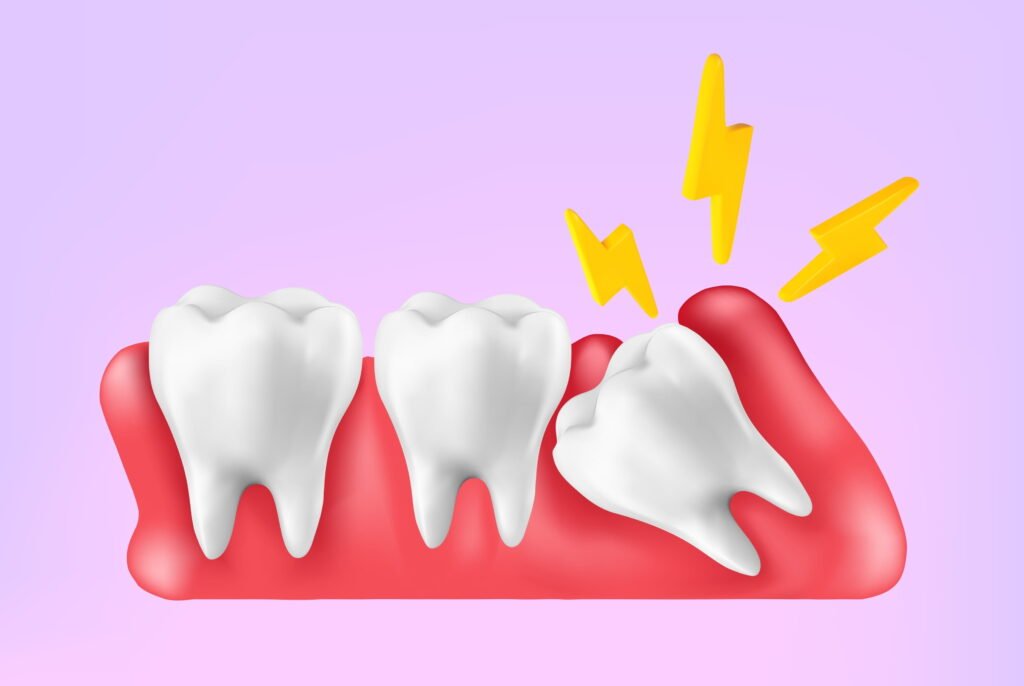
An impacted wisdom tooth is one that does not have enough room to erupt normally, or it comes in at the wrong angle and gets trapped partly or fully under the gums or bone.

Some impacted wisdom teeth stay quiet for a period of time. Others lead to pain, swelling, infection, damage to nearby teeth, or gum problems.
They can also be harder to clean, which raises the risk of tooth decay and gum disease.
Why Wisdom Teeth Become Impacted
There often just is not enough room
Most modern jaws do not have much extra space at the back of the mouth. Since wisdom teeth are the last teeth to arrive, they may not erupt properly if the space is already taken.
The tooth may grow in sideways or at an angle
Some wisdom teeth push against the tooth in front of them. Others stay partly trapped below the gumline.
That poor position is what creates many of the symptoms and complications patients notice.
Symptoms of an Impacted Wisdom Tooth
Not every impacted wisdom tooth hurts right away. But when symptoms do show up, they usually follow a pattern.
Pain at the back of the mouth
This is one of the most common signs. You may feel soreness near the last molar, discomfort when chewing, or pain that spreads into the jaw, ear, or side of the face.
Swollen or tender gums
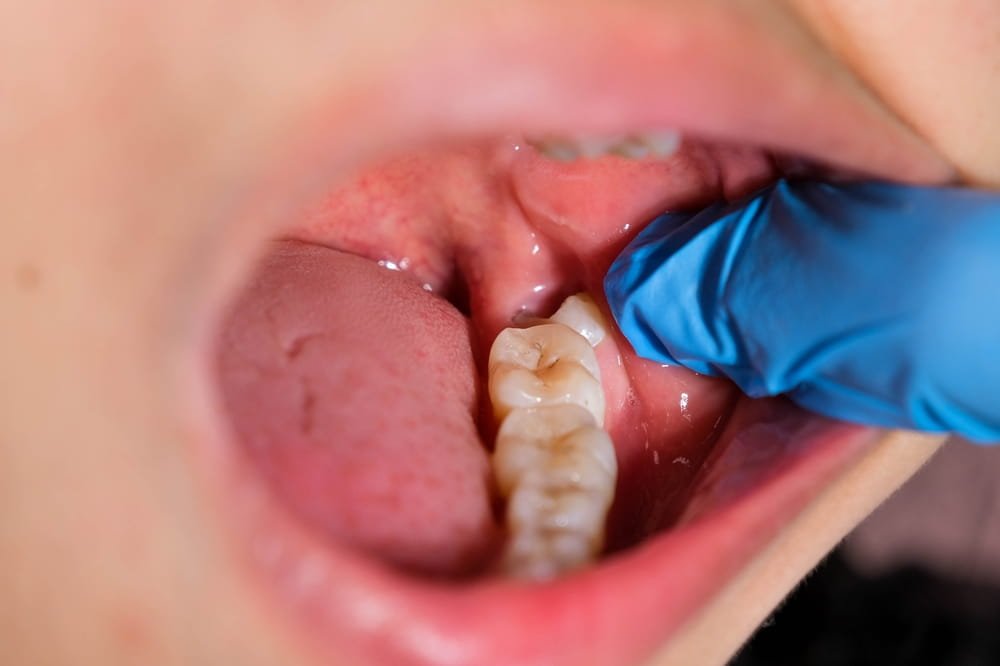
The gum around a partially erupted wisdom tooth can become inflamed. It may look red, feel puffy, or hurt when you brush.
Jaw stiffness or trouble opening wide
If inflammation builds up, your jaw may feel tight or sore. Some patients notice they cannot open fully without discomfort.
Bad taste or bad breath
When food and bacteria collect around a partly erupted tooth, they can trigger infection or irritation. That can lead to a bad taste in the mouth or unpleasant breath that keeps coming back.
Swelling in the cheek or around the jaw
As the area becomes more inflamed, you may notice visible swelling. This can be mild at first, then worsen during flare-ups.
Headache or pressure feeling
Pain from a lower wisdom tooth can sometimes radiate into the jaw joint, temple, or side of the head. It may feel confusing at first because the source is not always obvious.

This is an inference based on how impacted-wisdom-tooth pain commonly radiates through the jaw and face.
When Symptoms Turn into Complications
This is where it gets more serious.
An impacted wisdom tooth is not always an emergency. But it can become one if infection or swelling starts spreading.
Infection around the tooth
A partially erupted wisdom tooth can trap bacteria under a gum flap. That can lead to pericoronitis, a painful infection with swelling, tenderness, bad taste, and difficulty chewing.
Damage to the neighbouring tooth
If the wisdom tooth pushes against the second molar, it can contribute to decay, root damage, or bone loss around that healthy tooth.
Cavities and gum disease
Wisdom teeth are located so far back that they are often harder to brush and floss well. That makes them more prone to decay and gum disease than other teeth.
Cysts and bone damage
In some cases, an impacted wisdom tooth can be associated with a cyst. That cyst can damage nearby roots or affect the bone around the tooth.
Repeated flare-ups
One of the most frustrating things about an impacted wisdom tooth is that it can calm down, then come back again.
Patients often mistake this for “it healed on its own,” when really the source of the problem is still there.
This is an inference supported by clinical descriptions of recurrent symptoms and changing position or hygiene issues over time.
What Your Dentist Will Check First
At White Tooth Dental, care is described as connected and comprehensive. That matters here, because wisdom tooth pain is not just about one tooth.
It can affect your gums, neighbouring teeth, your bite, and your overall comfort.
A clinical exam
Your dentist will check the back of your mouth for swelling, gum infection, tenderness, and signs that the tooth is partly erupted or trapped.
Dental X-rays
X-rays help show the exact angle of the tooth, how deep the impaction is, and whether the neighbouring tooth or bone is being affected. This is standard because the position of impacted third molars often cannot be judged fully by visual exam alone.
Your symptom pattern
Your dentist will also want to know whether the pain is constant, whether swelling comes and goes, whether you have trouble chewing, and whether you have had previous infections.
Treatment Options for an Impacted Wisdom Tooth
The right treatment depends on your symptoms, the position of the tooth, and the level of risk.
1. Monitoring
Sometimes observation is appropriate
If the tooth is impacted but not currently causing pain, infection, damage, or hygiene problems, your dentist may recommend monitoring it with periodic exams and X-rays. Not every impacted tooth needs immediate removal.
That said, monitoring does not mean ignoring. The area still needs follow-up because problems can develop later.
2. Managing the infection or inflammation first
Immediate relief may come before removal
If the area is actively inflamed or infected, your dentist may first focus on calming it down.
That can include cleaning the area, giving home-care instructions, and in some cases prescribing medication based on the severity and presentation.
Delaying surgery until acute infection is controlled is also a recognized pathway in some cases.
3. Wisdom tooth extraction
This is the most common definitive treatment
If the impacted wisdom tooth is causing pain, repeat infections, damage to nearby teeth, or other complications, removal is often recommended.
Major clinical sources consistently note that symptomatic impacted wisdom teeth are commonly taken out.
Simple vs surgical removal
If enough of the tooth has erupted, removal may be more straightforward. If the tooth is trapped under the gum or bone, the extraction is usually surgical.
Sedation and comfort options
White Tooth Dental offers sedation dentistry and emphasizes reassuring, comfort-focused care for more stressful procedures. That can be especially helpful for patients who feel anxious about wisdom tooth treatment.
What Recovery Usually Looks Like
Recovery depends on how complex the extraction is and whether one or multiple teeth are removed.
Many patients feel much better within a few days, though full healing can take longer. Some patient guidance sources note that full recovery may take up to about two weeks in certain cases.
Common short-term symptoms after removal
Swelling
This usually peaks early, then improves over the next few days.
Mild discomfort
This is normal after extraction and is usually managed with the instructions your dentist gives you.
Limited mouth opening
This can happen temporarily, especially after lower wisdom tooth surgery.
Following aftercare instructions matters. It helps reduce the risk of dry socket and supports smoother healing. White Tooth Dental specifically notes dry socket as a post-procedure emergency they can help manage.
People Also Ask About Impacted Wisdom Teeth
What are the symptoms of an impacted wisdom tooth?
Common symptoms include pain at the back of the mouth, swollen gums, bad taste, bad breath, jaw stiffness, facial pain, and swelling near the jaw or cheek. Some impacted teeth cause no symptoms at first.
Is an impacted wisdom tooth dangerous?
It can be. Left untreated, it may lead to infection, cavities, gum disease, damage to the tooth next to it, or cyst formation.
Does every impacted wisdom tooth need to be removed?
No. Some can be monitored if they are not causing symptoms or damage. But if the tooth is painful, infected, hard to clean, or harming nearby structures, removal is often the recommended option.
Can an impacted wisdom tooth cause headaches or ear pain?
It can cause pain that radiates through the jaw and face, which some people perceive as ear pain, temple pain, or headache-like discomfort.
How do dentists diagnose an impacted wisdom tooth?
Diagnosis usually involves a dental exam and X-rays to see the tooth’s position, angle, and effect on surrounding teeth and bone.
Can I leave an impacted wisdom tooth alone if it does not hurt?
Sometimes yes, but it still needs monitoring. Some impacted wisdom teeth stay quiet for a while and then start causing problems later.
What You Should Not Ignore
Call your dentist sooner rather than later if you notice:
- Swelling that is getting worse
- Pain when chewing
- A bad taste that keeps returning
- Trouble opening your mouth
- Gum irritation behind your last molar
- Fever or signs of infection
White Tooth Dental advises patients not to downplay pain, swelling, bleeding, or visible signs of infection, and highlights urgent evaluation for those symptoms.
A Note on Protecting the Rest of Your Smile
Patients sometimes focus only on the wisdom tooth pain itself. But the bigger goal is protecting the teeth around it, the gums around it, and the long-term health of your bite.
That is why early evaluation matters.
Whether you are also interested in restorative care, preventive care, or cosmetic options like porcelain veneers, it is always easier to plan for a healthy smile when hidden problems at the back of the mouth are not being left to grow worse.
Doctor’s Recommendation
If you think you may have an impacted wisdom tooth, do not wait for the pain to become severe.
A proper exam and X-ray can tell you whether the tooth is simply being watched or whether it is already putting nearby teeth and gums at risk. The earlier you catch it, the more options you usually have. At White Tooth Dental, the approach is clear: treat the issue, explain the pathway, and help you feel informed and cared for from start to finish.
Book an online appointment for an inspection, or call White Tooth Dental at (416) 766-4535 to have your wisdom tooth checked before a small problem turns into a much bigger one.