

Looking for the best teeth cleaning in Toronto? The right dental cleaning isn’t simply about finding the lowest price. A quality cleaning should be based on your oral health, the amount of plaque or tartar present, your gum condition, and the type of professional cleaning you need.
Think of your dental cleaning as a highly specialized “health check-up” for your mouth. It’s not just about aesthetics; it’s about proactively protecting yourself from future pain, unexpected costs, and even broader health issues. At White Tooth Dental Family Dentistry in Bloor West Village, dental cleanings are part of a preventive approach designed to help patients maintain healthy teeth and gums.
The Unsung Heroes of Oral Health: Plaque, Tartar, and Why They Matter
Before we dive into what makes a great cleaning, let’s talk about the silent adversaries that professional cleanings battle every day: plaque and tartar.
Imagine your teeth are like tiny houses. Plaque is the invisible film of bacteria constantly building up on your “roof” (tooth surface) and “walls” (gumline). It’s soft, sticky, and you can usually brush it away at home. But here’s the “aha!” moment: if plaque isn’t removed regularly, it hardens into something much tougher called tartar (or calculus).
Tartar is like concrete; it can’t be removed by brushing or flossing alone. It creates a rough surface that attracts even more plaque, becoming a breeding ground for bacteria. This buildup irritates your gums, leading to inflammation (gingivitis) and, if left unchecked, can progress to more serious gum disease (periodontitis), which can damage the bone supporting your teeth.
Beyond Just a Fresh Feeling: The benefits of regular cleanings extend far beyond a clean, fresh mouth. They are vital for:
-
- Preventing Cavities: Removing plaque and tartar eliminates the bacteria that cause tooth decay.
-
- Stopping Gum Disease in its Tracks: Cleanings reverse gingivitis and help manage periodontitis, protecting your gums and the bone supporting your teeth.
-
- Freshening Your Breath: Bad breath (halitosis) is often a direct result of bacterial buildup.
-
- Early Detection: Your hygienist and dentist can spot potential issues like small cavities, gum problems, or even early signs of oral cancer during your visit, long before they become painful or expensive.
-
- Protecting Your Overall Health: Emerging research continues to link oral health to systemic health, showing that gum disease can increase the risk of conditions like heart disease, stroke, and diabetes. A clean mouth contributes to a healthier body.
Demystifying Your Toronto Dental Cleaning Appointment
The thought of a dental cleaning can sometimes bring a little anxiety, especially if it’s been a while since your last visit. Let’s walk through what actually happens during a professional cleaning, so you know exactly what to expect.
What Happens During a Professional Teeth Cleaning?
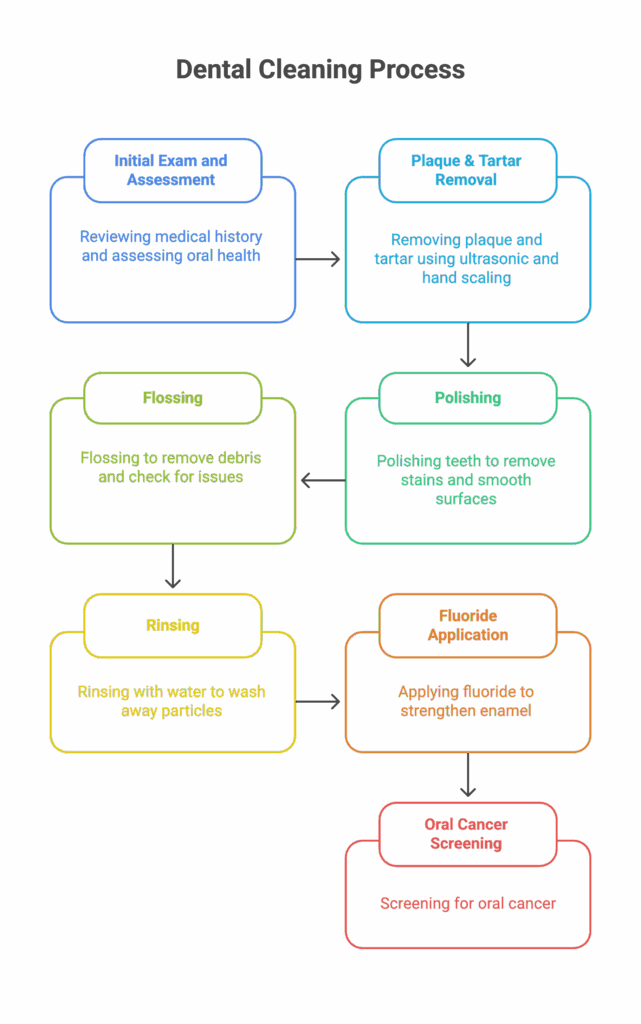
A typical dental hygiene appointment is a thorough, multi-step process designed to give your mouth the comprehensive care it needs:
-
- Initial Exam and Assessment: Your dental hygienist will start by reviewing your medical history and taking a look at your overall oral health. They’ll check your gums for any signs of inflammation or bleeding, and quickly assess your teeth for obvious concerns. This is also a great time to share any specific concerns or sensitivities you might have.
-
- Plaque & Tartar Removal (Scaling): This is the core of the cleaning. Your hygienist will use specialized tools to meticulously remove both plaque and hardened tartar from all surfaces of your teeth, both above and below the gumline.
-
- Ultrasonic Scalers: Many modern clinics, like White Tooth Dental, utilize gentle ultrasonic scalers. These tools use high-frequency vibrations and a fine mist of water to effectively break down tartar, often making the process more comfortable and quicker than traditional hand scaling alone. They vibrate away the deposits without scratching your teeth.
-
- Hand Scaling: Fine hand instruments are then used to carefully scrape away any remaining stubborn deposits, ensuring a smooth, clean surface.
-
- Feeling anxious? Don’t worry, many practices now offer [Sedation Dentistry] options to ensure your comfort during any procedure, including cleanings.
-
- Polishing: After scaling, your teeth are polished using a special gritty toothpaste and a rotating brush. This removes surface stains and leaves your teeth feeling incredibly smooth. A smooth surface makes it harder for plaque to stick, so it’s not just for looks!
-
- Flossing: Even after polishing, your hygienist will thoroughly floss between your teeth, removing any remaining debris and checking for potential trouble spots.
-
- Rinsing: You’ll be asked to rinse with water, often containing fluoride, to wash away any loosened particles.
-
- Fluoride Application: A fluoride gel or foam is typically applied to your teeth. Fluoride helps strengthen your tooth enamel, making it more resistant to cavities.
-
- Oral Cancer Screening: A crucial, yet often overlooked, part of your regular cleaning is an oral cancer screening. Your hygienist and dentist will carefully examine your tongue, throat, cheeks, and lymph nodes for any abnormalities. Early detection is key for successful treatment.
Understanding Dental Cleaning Costs in Toronto: Beyond the Sticker Price
One of the most common questions people have is: “How much does a dental cleaning cost in Toronto?” The cost can vary, but transparency is vital. Most dental practices in Ontario follow the fee guide published by the Ontario Dental Association (ODA).
-
- Routine Cleaning (Prophylaxis): This is for patients with healthy gums or mild gingivitis. The cost is often calculated based on “units of time,” with each unit typically representing 15 minutes of scaling. A routine cleaning might involve 2-4 units, plus an exam, polishing, and fluoride.
-
- Deep Cleaning (Scaling and Root Planing): If you have gum disease (periodontitis), you might need a “deep cleaning.” This is a more intensive procedure that focuses on removing tartar and bacteria from the root surfaces below the gumline. It’s typically done in quadrants of the mouth and costs more than a routine cleaning due to the complexity and time involved.
-
- Debridement: Sometimes, if there’s extensive tartar buildup, an initial debridement appointment is needed to remove large deposits before a comprehensive cleaning can be performed.
What Influences the Cost?
-
- Time Needed: The amount of plaque and tartar buildup directly impacts the time (and thus units) required.
-
- Type of Cleaning: As mentioned, routine vs. deep cleaning has different fee structures.
-
- Additional Services: X-rays, fluoride application, and the dental exam itself are separate line items on your bill.
-
- Clinic Specifics: While following the ODA guide, some clinics might have slight variations or promotional offers.
Insurance Coverage: Most dental insurance plans cover a significant portion of routine dental cleanings, often 80-100%, as they are considered preventive care. It’s always best to check your specific plan details or have your dental office submit a pre-determination to your insurance company. For more complex cases like deep cleanings, coverage might vary.
The Long-Term Value: While you might look at the immediate cost, consider the long-term savings. A routine cleaning that costs a couple of hundred dollars can prevent a root canal (which can cost over $1,000) or advanced gum disease treatments (which can cost thousands). Preventive care is always more cost-effective than reactive treatment.
Common Misconceptions About Dental Cleanings
Let’s clear up some common myths that might be holding you back from prioritizing your dental health:
-
- Myth: “Dental cleanings are always painful.”
-
- Fact: While some sensitivity is possible, especially if you have significant buildup or gum inflammation, modern techniques and tools (like ultrasonic scalers) are designed for comfort. Most patients find routine cleanings entirely painless. If you experience discomfort, simply communicate with your hygienist; they can adjust their technique or even apply a topical anesthetic.
-
- Myth: “Cleanings damage tooth enamel.”
-
- Fact: Absolutely not! Dental professionals are highly trained to remove plaque and tartar without harming your enamel. In fact, removing tartar protects your enamel from the acidic byproducts of bacteria that cause cavities.
-
- Myth: “Brushing and flossing at home are enough.”
-
- Fact: Home care is essential, but it cannot remove hardened tartar. Think of it like washing your car: you can wash it yourself weekly, but periodically, it needs a professional detailing to reach every nook and cranny and restore its shine. Professional cleanings get to those hard-to-reach spots and remove what your brush can’t.
-
- Myth: “I only need a cleaning when something hurts.”
-
- Fact: This is a common and risky misconception. Many dental problems, especially early gum disease or small cavities, are silent and painless in their initial stages. Regular cleanings allow for early detection and intervention, preventing minor issues from escalating into major, painful, and expensive problems.
How to Choose the ‘Best Place’ for Your Teeth Cleaning in Toronto
So, how do you find that “best place” for your dental cleaning in a city as big as Toronto? It’s not just about the nearest clinic or the lowest price. It’s about finding a partner in your oral health journey.
Beyond Location and Cost: What Truly Defines a Great Dental Clinic?
When evaluating clinics for your dental cleaning, consider these factors:
-
- Patient Care Philosophy: Look for a clinic that emphasizes a patient-centric, compassionate, and holistic approach. Do they take the time to listen to your concerns? Do they educate you about your oral health and treatment options? A practice like White Tooth Dental focuses on establishing strong relationships and providing personalized care that considers your overall well-being.
-
- Technology and Comfort Measures: A clinic that invests in modern dental technologies (like digital X-rays for reduced radiation, intraoral cameras for better visualization, or gentle ultrasonic scalers) often signifies a commitment to quality and patient comfort. If you have dental anxiety, inquire about options like [Sedation Dentistry] to make your experience more relaxed.
-
- Hygienist Expertise and Communication: A skilled and empathetic dental hygienist is paramount. They should be thorough, gentle, and excellent communicators, explaining what they’re doing and offering personalized advice for at-home care.
-
- Comprehensive Service Offerings: While you might just be looking for a cleaning now, a clinic that offers a full suite of services—from General Services and preventive care to Cosmetic Dentistry and Restorative Dentistry—means you won’t have to switch providers if your needs evolve. This ensures a seamless, integrated approach to your oral health.
-
- Reviews and Testimonials: Online reviews offer valuable insights into other patients’ experiences. Look for comments that highlight thoroughness, friendliness, comfort, and effective results. Positive patient satisfaction ratings, like those garnered by Dr. Kristina Pahuta and her team, are strong credibility markers.

Questions to Ask Before Your First Cleaning
Empower yourself by asking these questions when you contact a potential clinic:
-
- “What measures do you take to ensure patient comfort during cleanings?”
-
- “Do you follow the ODA fee guide for your services?”
-
- “How do you approach patient education regarding oral hygiene?”
-
- “What type of technology do you use for cleanings?”
-
- “Can you explain your philosophy on preventive care?”
Your Top Questions About Dental Cleanings in Toronto, Answered
How often should I get my teeth cleaned?
The general recommendation is typically every six months. However, this isn’t a one-size-fits-all rule. Your dentist or hygienist might recommend more frequent cleanings (every 3-4 months) if you have specific risk factors like gum disease, a history of cavities, smoking, or certain medical conditions. They’ll create a personalized hygiene plan just for you.
What’s the difference between a regular cleaning and a deep cleaning?
A regular cleaning (prophylaxis) is for routine maintenance and involves removing plaque and tartar above the gumline and slightly below it, typically for healthy gums or mild gingivitis. A deep cleaning (scaling and root planing) is a therapeutic procedure for individuals with gum disease (periodontitis), where plaque and tartar have accumulated below the gumline, causing inflammation and bone loss. It’s more extensive and focuses on cleaning the root surfaces.
Can I make dental cleanings more affordable in Toronto?
Many clinics offer flexible payment options. Most dental insurance plans cover routine cleanings significantly. For those without insurance, some clinics might have specific promotions, or you can inquire about direct billing to insurance to ease upfront costs. Always discuss financial concerns with your clinic; they often have solutions to make care accessible.
What should I do if I have dental anxiety?
It’s very common to feel anxious! Look for clinics that prioritize patient comfort and offer solutions. Many, like White Tooth Dental, provide [Sedation Dentistry] options, from nitrous oxide (laughing gas) to oral sedatives, to help you relax during your appointment. Openly communicate your fears with the dental team; they are there to help make your experience as comfortable as possible.
Your Journey to a Healthier Smile Starts Here
Choosing the “best place to get your teeth cleaned in Toronto” isn’t just about finding a clinic; it’s about finding a dedicated partner in your oral health journey. It’s a place where transparency, compassionate care, advanced technology, and a commitment to your overall well-being come together.
A thorough, educational approach to dental cleanings empowers you with the knowledge to maintain your oral health for a lifetime. By prioritizing patient education and comprehensive, holistic care, you’re not just getting a cleaning; you’re investing in a healthier, happier you.
Ready to experience a dental cleaning that puts your comfort and education first? Learn more about our comprehensive dental services and how we tailor care to your unique needs.